Skip to content
📜 60-Year Epic Saga

60 Years of Korean Ramyeon: From a 10-Won Post-War Miracle to Global Soul Food

한국 라면 60년 대하드라마: 10원의 기적에서 세계인의 소울푸드로

From Namdaemun Market's post-war stew alleys in 1963 and Samyang's survival partnership with Myojo Foods, to Nongshim's rise, the 1989 beef-tallow scandal, and Buldak's viral wave since 2012—explore the full illustrated timeline in English or Korean below.

🌐Language Selection

1963 First Price

₩10

Cheaper than a coffee (₩35)

Annual Per Capita

77 bags

Ranked top 2 globally

Annual K-Exports

$1.2B+

Record exports in 2024

Buldak Total Sold

5.0B+

Over 90 countries worldwide

Chapter 01 · 1963The Genesis

Broth Born from Despair: The 10-Won Miracle of Samyang & Myojo

In the early 1960s, a decade after the devastating Korean War, South Korea remained crippled by severe poverty and chronic food scarcity. At Seoul’s bustling Namdaemun Market, hundreds of starving citizens lined up daily for bowls of kkulkkuri-juk (a 5-won discarded-food stew boiled from leftovers retrieved from nearby U.S. military bases, often tainted with cigarette filters and debris).

Witnessing this heartbreaking scene, Jeon Jung-yoon, then president of Jeil Life Insurance, made a life-altering vow:“What good is insurance when our people are starving in the streets? We need cheap, calorie-dense food that fills empty bellies instantly.”

Jeon liquidated his assets, convinced the South Korean government to grant \$50,000 in foreign exchange reserves, and traveled to Tokyo. Most established Japanese noodle manufacturers slammed their doors, demanding exorbitant licensing fees.

A Historic Act of Kindness: Mr. Kiyosumi Okui of Myojo Foods

Finally, Jeon met Kiyosumi Okui, president of Myojo Foods. Moved to tears by Jeon’s pure humanitarian mission, Okui made an astonishing decision: he transferred full factory blueprints and automated machinery at pure cost, waiving all royalties and technical fees completely. As Jeon prepared to board his flight back to Seoul at Haneda Airport, Okui personally slipped a handwritten slip of paper into his pocket: the proprietary master spice formulation for the soup broth.

On September 15, 1963, South Korea’s first instant noodle—Samyang Ramen—was born. Priced at just 10 Korean Won (less than a third the cost of a coffee), it initially confused shoppers who mistook “myeon” (cotton/fabric) for clothing. Free sampling campaigns at outdoor cinemas and government rice-rationing campaigns soon turned it into Korea's ultimate dietary lifesaver.
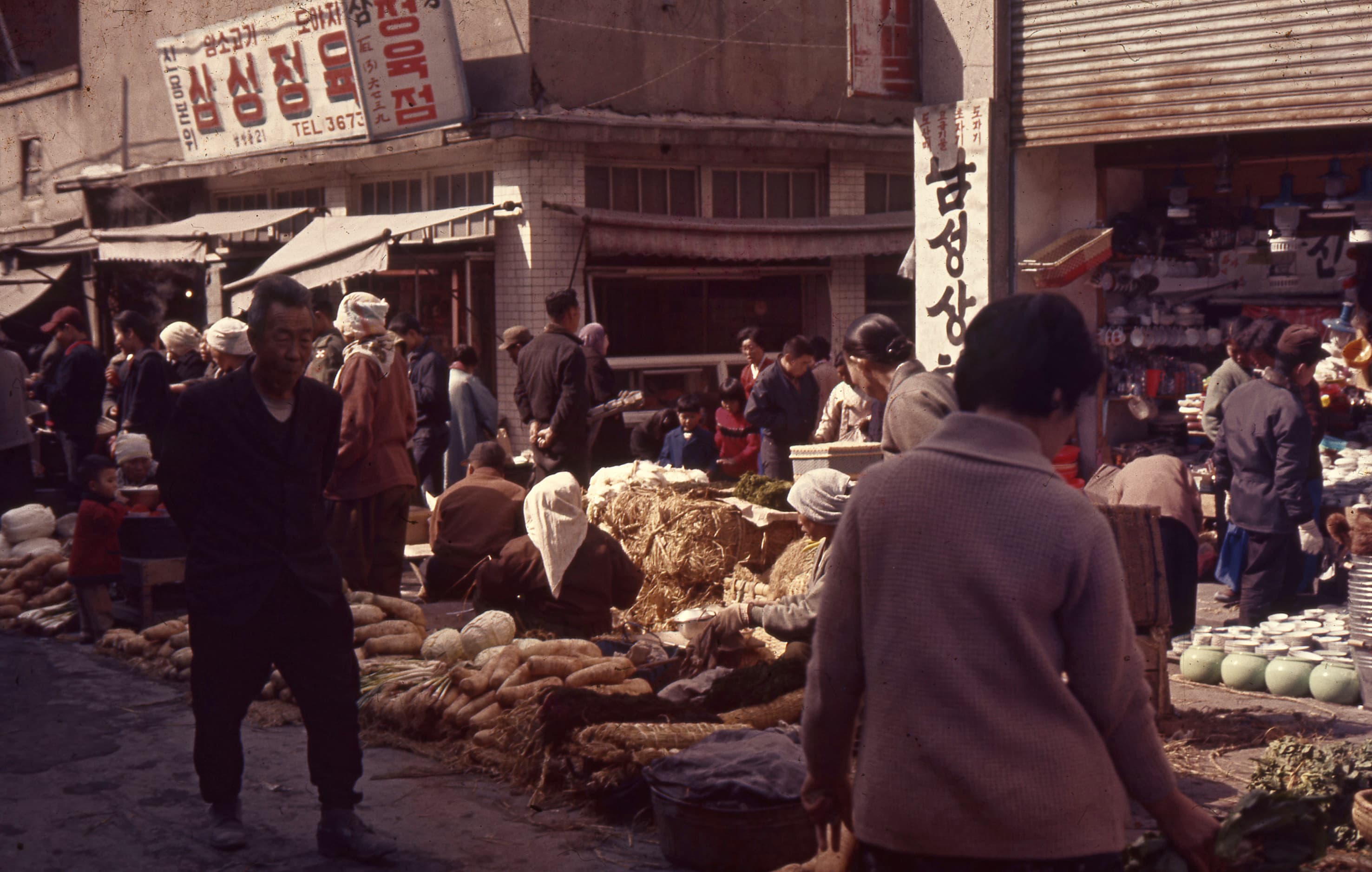
1959 Namdaemun Market Seoul
Namdaemun Market, Seoul (1959)

The bustling marketplace where founder Jeon witnessed extreme food poverty. (Source: Ministry of Culture, Sports & Tourism / KOGL CC BY 4.0)
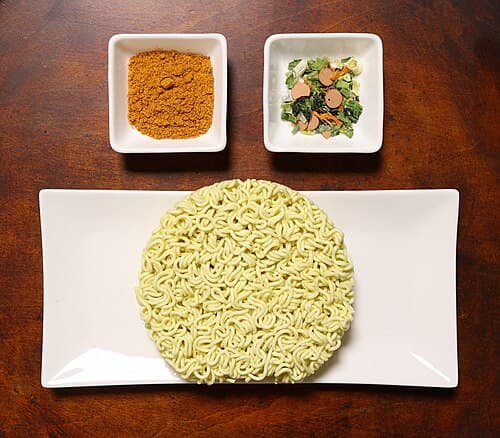
Samyang Ramen
Korea’s First Ramyeon

Samyang Ramen

The orange-packaged pioneer that started Korea’s multibillion-dollar ramyeon industry in 1963.
Chapter 02 · 1965 ~ 1970sThe Brotherly Rivalry

Brothers Diverge & Nongshim Rises: How Beef Broth Changed History

As Samyang's instant noodles swept the peninsula, Shin Choon-ho, the younger brother of Lotte Group founder Shin Kyuk-ho, recognized a transformative consumer shift. He urged his older brother to enter the noodle business, but the Lotte patriarch flatly refused:“Instant noodles are low-margin peasant food. Do not waste capital on it.”

Defying his brother, Shin struck out on his own in September 1965, establishing Lotte Industrial Co. with modest seed capital. His debut “Lotte Ramen” generated popular folklore through hilarious commercials featuring comedians offering bowls to each other (“Older brother first!” “No, younger brother first!”), but Samyang still commanded near-total monopoly.

The 1970 Game Changer: Korea’s First Beef Broth Ramyeon

Until 1970, virtually all instant ramyeon mirrored Japanese traditions by utilizing mild chicken-based broth. Shin noticed a profound culinary mismatch:“Koreans celebrate feast days and weddings with rich, simmering beef soups. Our DNA craves deep beef broth!”In October 1970, Lotte Industrial introduced Sogogi (Beef) Ramen. The rich, peppery red beef soup triggered an overnight revolution, with delivery trucks queuing overnight outside the factory gates.

In 1978, after family disputes over the Lotte trade name, Shin officially rebranded his empire as Nongshim Co., Ltd. (meaning “Farmer’s Honest Heart”). This marked the dawn of the greatest food rivalry in modern Asian business history.

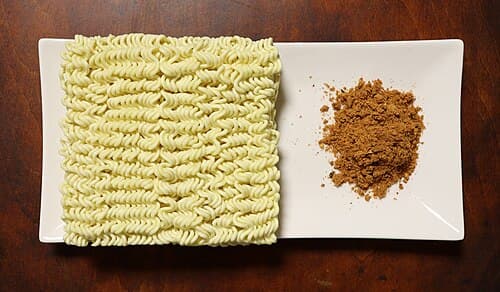
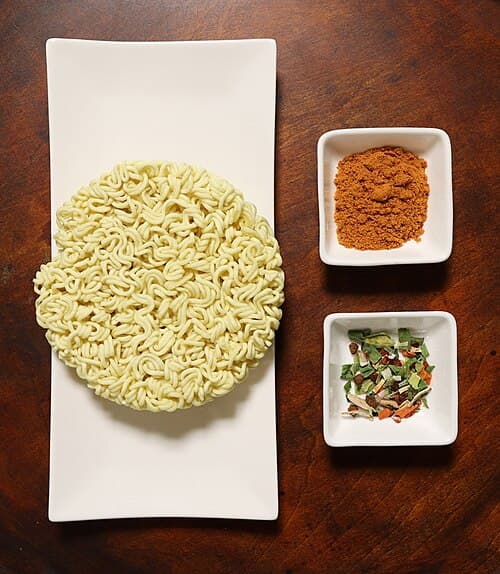
Crafting Noodle Strands
Evolution of Domestic Noodle Crafting

Korean food scientists pivoted from Japanese chicken-stock recipes to intense local beef and chili profiles.

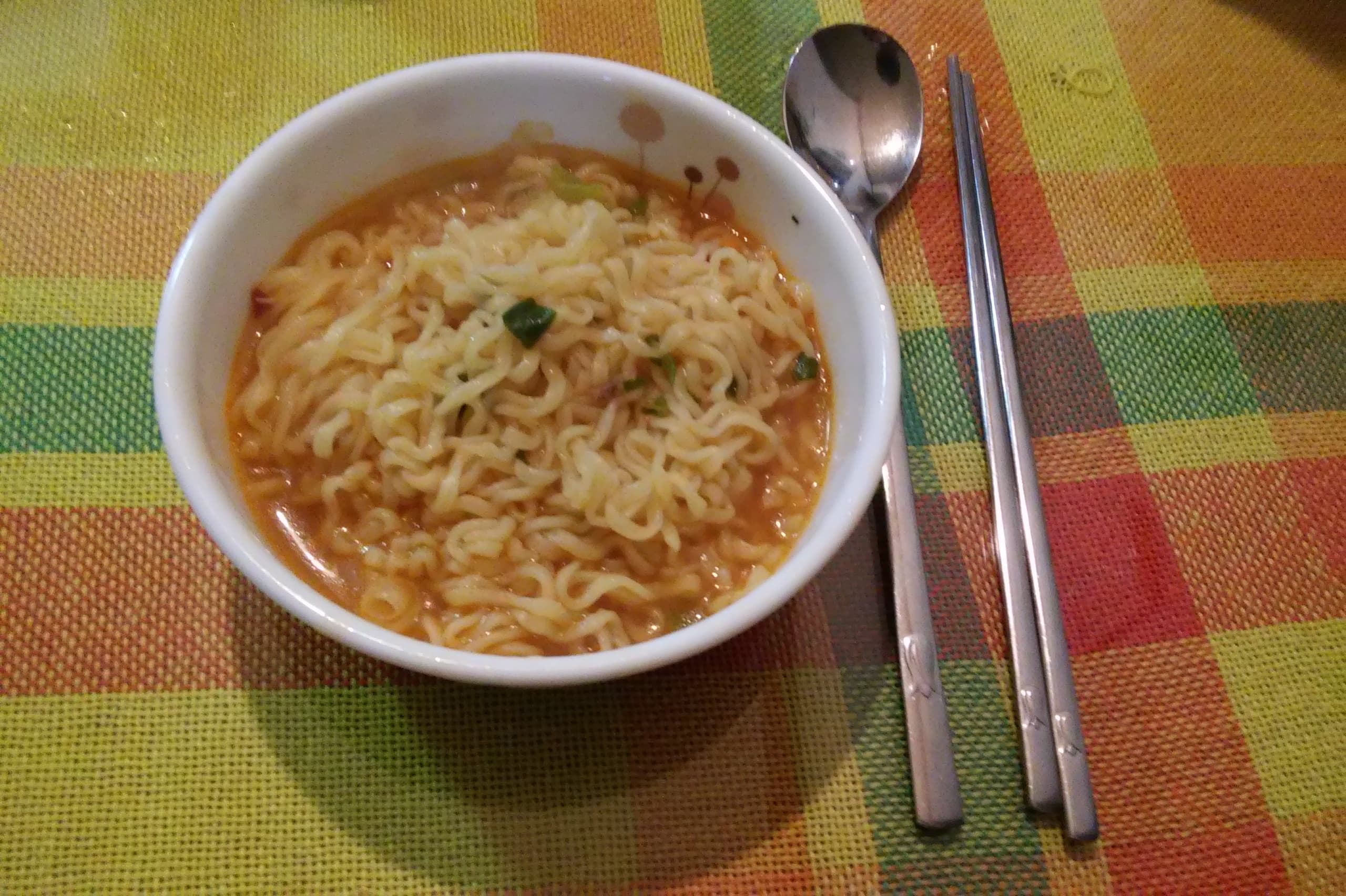
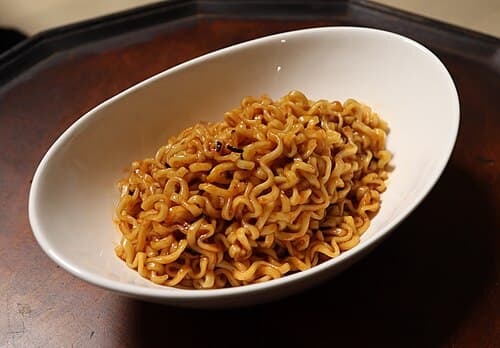
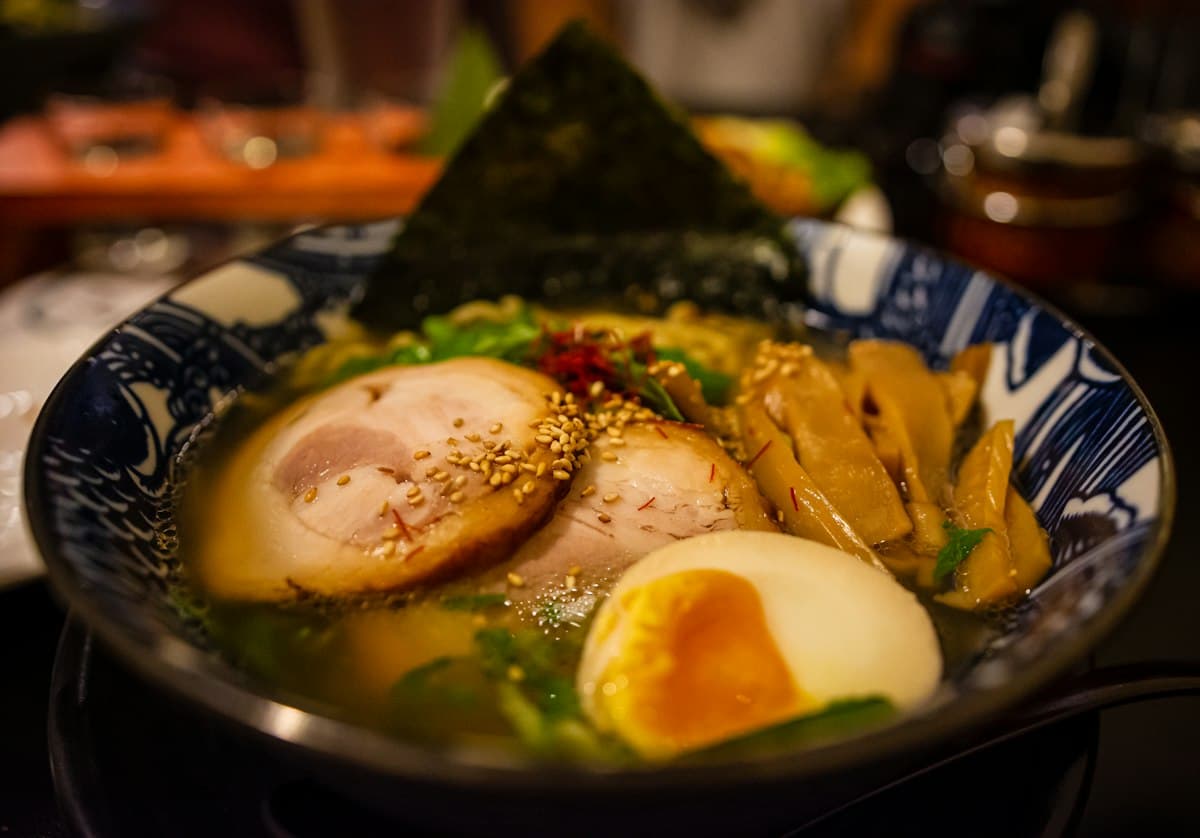
Traditional Korean Ramyeon Bowl
Rich Red Broth Served in Korean Stoneware

The introduction of savory beef base established ramyeon as an authentic soup staple. (Source: Wikimedia Commons CC BY-SA 4.0)

Chapter 03 · 1980sThe Red Empire

The Golden Era: Ansungtangmyun & Shin Ramyun Crown a New King

The 1980s heralded a golden renaissance of food technology in Korea. Shin Choon-ho maintained an uncompromising vision: “Noodles provide texture, but soup base captures the soul of the consumer.”In 1982, Nongshim unveiled a sprawling, ultra-modern soup concentrate manufacturing complex in Anseong, Gyeonggi Province.

September 1983: Ansungtangmyun (“Made for My Taste”)

Leveraging its new vacuum concentration tech, Nongshim launched Ansungtangmyun, capturing the hearty umami of rustic market cabbage soup with beef and fermented soybean paste. Its warm flavor and unbeatable value propelled Nongshim to a seismic milestone: in March 1985, Nongshim officially overtook Samyang to become South Korea's #1 noodle maker for the first time in history.

October 1986: The Arrival of the King — Shin Ramyun (辛)

Poised on the eve of the 1988 Seoul Olympics, Shin Choon-ho engineered a bold cultural flagship. Sporting a dramatic black-and-red design centered on the Chinese character 辛 (Shin: “Pungent / Spicy”), Shin Ramyun unleashed an unapologetically spicy Cheongyang chili and bone-broth punch. Backed by the iconic slogan “Makes a grown man weep,” Shin Ramyun permanently shifted Korea's benchmark flavor toward fiery heat. By 1991, it became the country’s undisputed top-seller—a title it has defended for over three consecutive decades.

Ansungtangmyun

안성탕면 (1983)

Propelled Nongshim to #1

Shin Ramyun

신라면 (1986)

#1 Best-seller since 1991

Golden Nickel-Silver Pot Ramyeon
The Quintessential Nickel-Silver Pot Boil

Fast thermal conductivity yields the ideal al dente chew favored in Korean homes. (Source: Unsplash License)

Chapter 04 · 1989The Tragic Scandal

The 1989 Beef Tallow Crisis: Samyang’s Darkest Decade and Eventual Vindication

On November 3, 1989, South Korea was shocked by front-page headlines announcing that prosecutors had arrested executives from five noodle manufacturers, led by Samyang, for allegedly frying noodles in “industrial-grade, inedible beef tallow.”

A Tragic Mistranslation and Sensational Witch-Hunt

The controversy stemmed from a grievous linguistic misunderstanding. Under U.S. Department of Agriculture (USDA) guidelines, fat rendered from non-meat cuts was categorized as “inedible beef tallow” before purification, yet routinely refined into edible shortening and margarine worldwide. Korean authorities mistranslated “inedible” as toxic chemical waste. A sensational media frenzy sparked instantaneous boycotts.

Millions of packaged noodles were recalled and crushed in landfills. Samyang was slapped with factory shutdowns, and its domestic market share evaporated from over 60% to single digits overnight.

Founder Jeon Jung-yoon mounted an exhausting eight-year legal battle. In August 1997, the Supreme Court of Korea fully acquitted Samyang of all charges, confirming the beef fat had been perfectly safe and legitimate. Yet the reputational damage proved catastrophic. Hobbled by crippling debts, Samyang fell into court receivership during the 1998 Asian Financial Crisis, casting a long winter over Korea’s pioneering noodle maker.

Chapter 05 · 2012 ~ PresentThe Global Resurrection

The Buldak Phenomenon: How Fire Noodles Conquered TikTok, America & the World

The architect of Samyang's modern salvation was Kim Jung-soo, daughter-in-law of founder Jeon. Having stepped into corporate leadership to rescue the family business, she visited a fiery chicken restaurant in Seoul’s Myeongdong district with her teenage daughter in spring 2010. Watching office workers sweat profusely while joyfully relieving stress through tears, she struck inspiration:“We need an unapologetically extreme, dry stir-fried noodle that unleashes pure cathartic adrenaline!”

1,200 Chickens and 2 Tons of Chili Sauce

Samyang's culinary team spent an entire year testing Mexican Habaneros, Vietnamese bird's eye chilis, and Korean Cheongyang peppers, exhausting over 1,200 chickens and two tons of sauce. In April 2012, the legendary Hot Chicken Flavor Ramen (Buldak) debuted.

Initially dismissed by traditional critics as “lethally inedible,” its breakthrough arrived in 2014 when the popular YouTube channel Korean Englishman filmed Londoners attempting the scorching noodles. The video catalyzed the viral “Fire Noodle Challenge,” prompting millions of global creators across YouTube and TikTok to test their spice limits.

Spurred by spinoff hits like Carbonara Buldak and high-profile endorsements from Grammy-winning superstar Cardi B, Buldak sold out across Costco and Walmart nationwide. With cumulative sales topping 5 billion packages in 90+ countries, overseas exports surged to over 80% of Samyang's total revenues. In 2024, Samyang’s market capitalization miraculously surpassed rival Nongshim—a dramatic, 35-year underdog resurrection unmatched in modern corporate history.

Buldak Original

불닭볶음면 (2012)

Fire Noodle Challenge Icon

Buldak Carbonara

까르보 불닭 (2017)

Viral US Supermarket Craze

Global Pop Culture Stature

Over 10 Billion TikTok Views for #Buldak

Beyond a meal, Buldak became a badge of honor and a participatory rite of passage for Gen Z creators worldwide.

Chapter 06 · TodayCultural Phenomenon

A Global Cultural Phenomenon: From Parasite’s Ram-don to the Han River

Today, Korean ramyeon has transcended convenience food to become an undeniable pillar of global pop culture. When Bong Joon-ho’s cinematic masterpiece Parasite swept four historic Academy Awards in 2020, its depiction of luxury sirloin atop “Ram-don” (Chapaguri) sparked viral cooking demonstrations from New York to London.

With BTS superstar Jin championing Ottogi Jin Ramen and members frequently bonding over steaming midnight noodle bowls on Weverse, ramyeon is globally celebrated alongside K-pop and Korean cinema.

At night along Seoul's shimmering Han River parks, thousands of visitors and locals crowd riverside convenience stores to activate specialized automated induction machines, simmering noodles in foil bowls in precisely three and a half minutes—a bucket-list Seoul ritual.

From 10-Won Relief to a \$1.2 Billion Cultural Force

The 60-year saga that began on the war-torn stones of Namdaemun Market has blossomed into a \$1.2+ billion global culinary wave. From Jeon Jung-yoon’s humble 10-won breakthrough to Shin Choon-ho’s spicy red empire and Kim Jung-soo’s viral Buldak revolution, Korean ramyeon stands as a testament to indomitable resilience, culinary boldness, and community soul food.

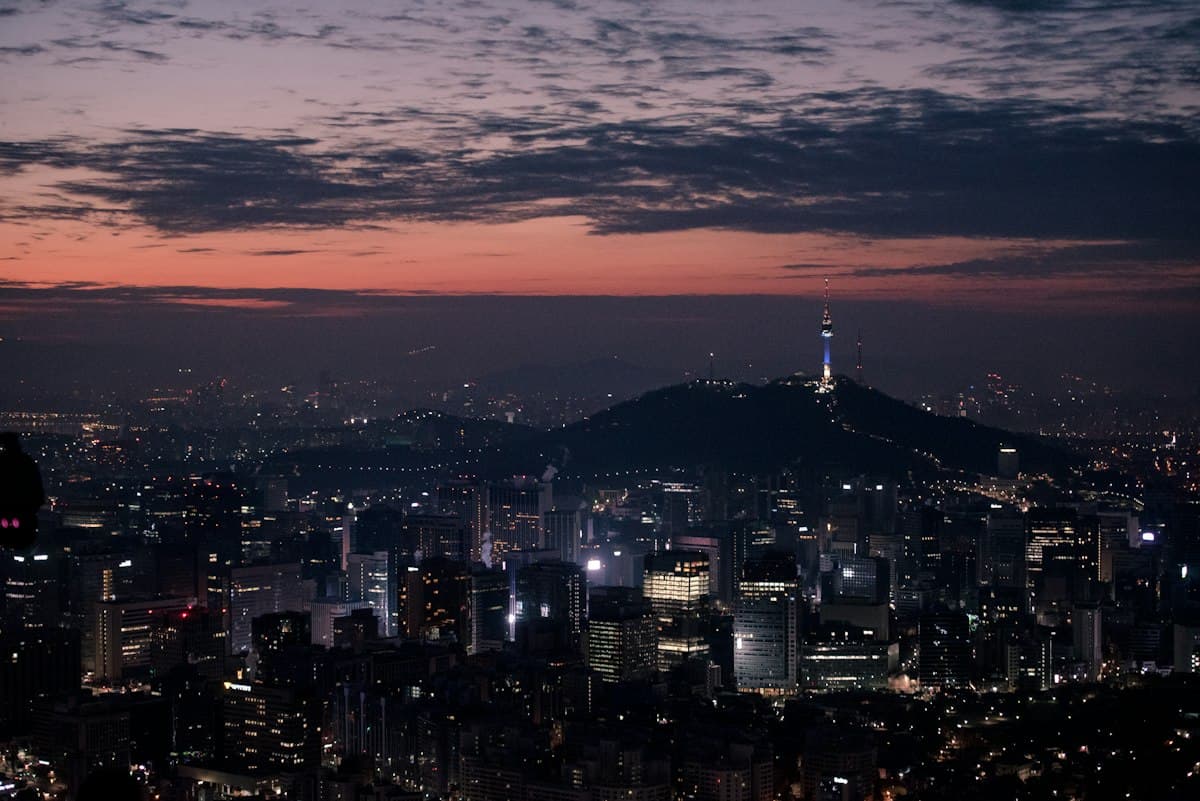
Seoul Nightscape & Han River Vibe
Glowing Seoul Nightscape & Han River Vibe

Riverside induction cooking has become a must-try Seoul night experience. (Source: Unsplash License)

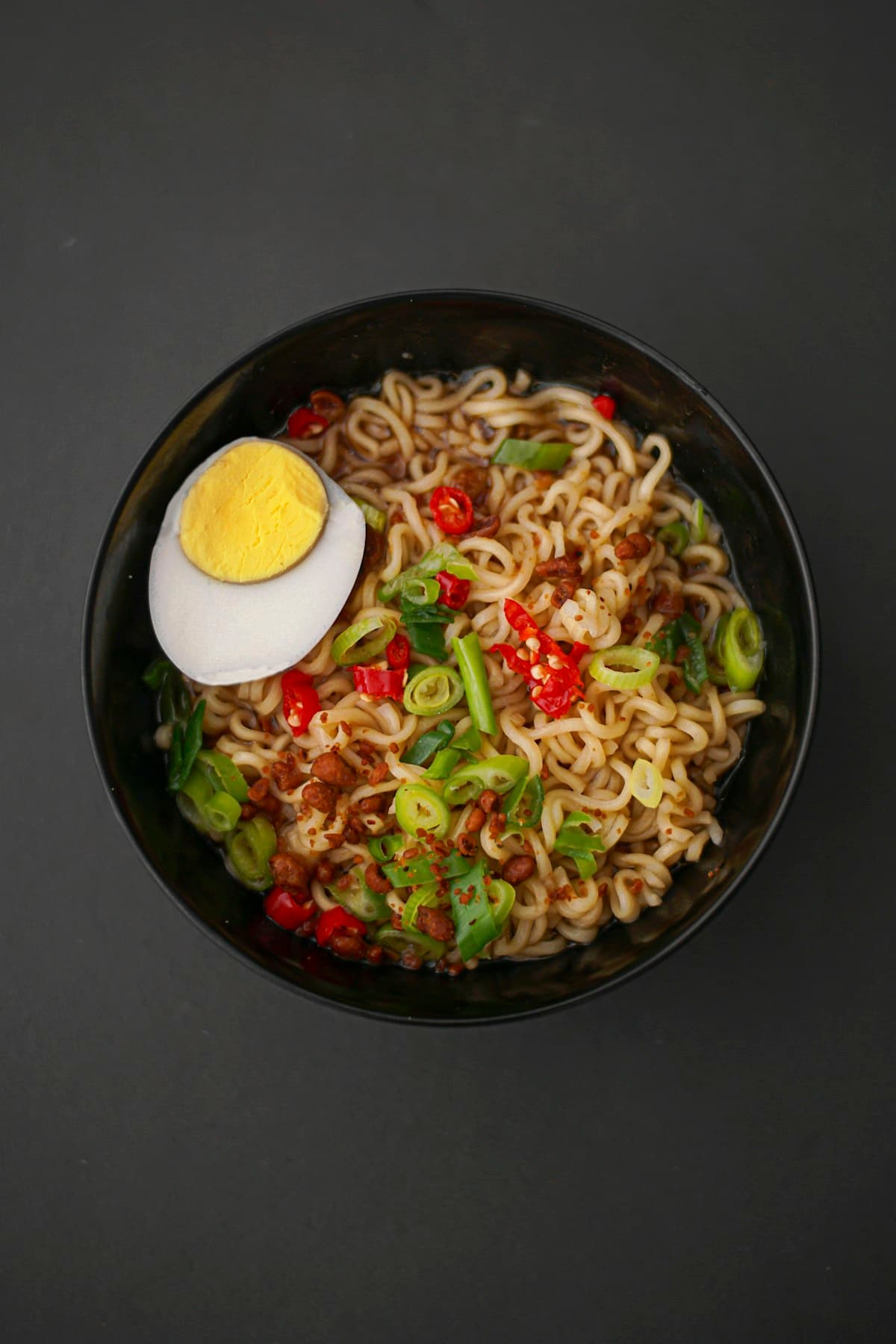
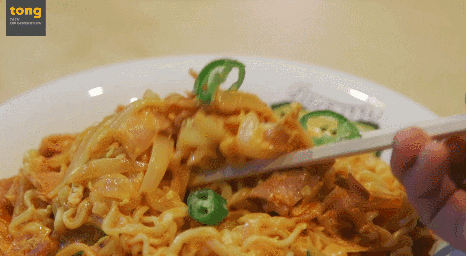
Steaming Hot Chopstick Noodles
Lifting Chewy Noodles in Rich Broth

The universally comforting snap of chewy Korean fried noodles. (Source: Unsplash License)

💡Curious Trivia & Secrets

5 Fascinating Korean Ramyeon Secrets

Click each question to unveil the ingenious food science and corporate backstories!

Answer

There are four key engineering reasons: 1) Packing roughly 120 meters of noodles into a compact square block; 2) Creating gaps so hot oil during frying and boiling water penetrate evenly; 3) Helping chopsticks grip the noodles and locking broth into the curves; 4) Spring-like flexibility prevents the fragile dry noodle brick from shattering during transit.

Taste the Legends of Ramyeon History

Explore in-depth taste evaluations, exact boiling ratios, and celebrity pairing hacks for all historic noodles in our lab catalogue.

Image Attribution & Archival License Notice

  • • 1959년 남대문시장 거리 사진: 대한민국 문화체육관광부 한국저작권위원회 ‘공유마당’ 공공저작물 (크리에이티브 커먼즈 저작자표시 CC BY 4.0).
  • • 뚝배기 한국 라면 사진 (File:Korea Ramyeon.jpg): 위키미디어 공용 Kgw5360 제공 (CC BY-SA 4.0 라이선스).
  • • 제면, 양은냄비 조리, 모락모락 면발, 서울 야경 사진: Unsplash 무료 사용 라이선스 (Unsplash License - Free for commercial and editorial use).
  • • 삼양라면, 안성탕면, 신라면, 불닭볶음면 제품 사진: 상표권 및 패키지 저작권은 각 제조사(삼양식품, 농심)에 귀속되며, 본 웹사이트는 제품 식별 및 역사적 학술/보도 목적으로 인용하였습니다.