Nongshim · Black bean noodles
·★4.9(111 reviews)Nongshim Jjawang
짜왕 (Jjawang)
Thick noodles and a rich black bean sauce aiming for restaurant jjajangmyeon.
- Heat
- 0/5
- Cook
- 5′
- Water
- 600ml
- Calories
- 565kcal
What Nongshim Jjawang tastes like
Jjajangmyeon, noodles in a dark, savory black bean sauce, is the most famous dish of Korean-Chinese restaurants. Jjawang, roughly king of jjajang, is Nongshim's premium attempt at bringing that experience home. The sauce is dark, glossy and savory, with roasted black bean depth, a mild sweetness reminiscent of slow-cooked onions, and a toasty oil aroma. There is no chili heat at all. It tastes richer and more restaurant-like than Chapagetti, which is lighter and sweeter.
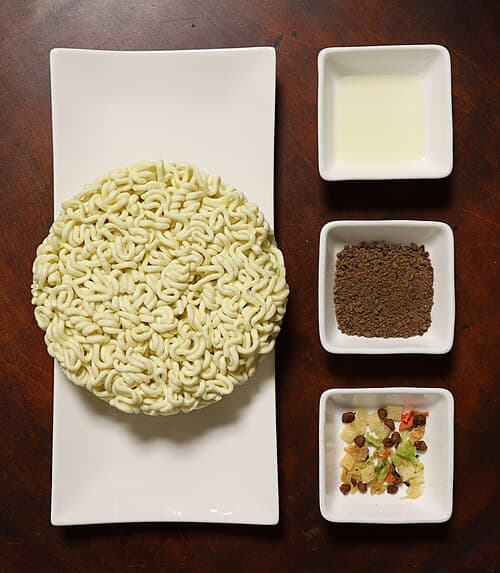
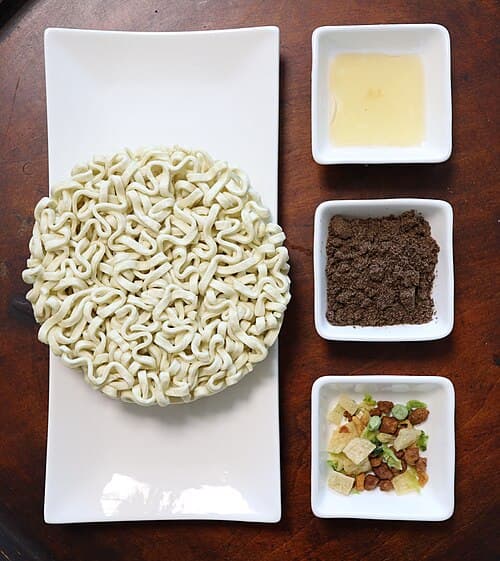
The noodles are the star. They are noticeably thick and wide, closer to fresh restaurant noodles than to standard ramyeon, and they have a dense, chewy bite. That thickness means they need a full five minutes or so to cook through. Undercook them and the center stays chalky; overcook them and they get soft and swell. When they are right, they grab the sauce well and give each mouthful a satisfying weight.
Jjajangmyeon has a special place in Korean life. It is the classic delivery meal on moving day, a comfort food for kids, and it even has an unofficial day: Black Day on April 14, when singles eat jjajangmyeon together as a playful counterpart to Valentine's Day and White Day. Jjawang appeared in the mid-2010s alongside a wave of thicker premium noodles and quickly became a popular choice for people who wanted the restaurant version without ordering delivery.
Try it if you have no interest in chili heat but want something deeply savory, or if you loved jjajangmyeon in Korea and miss it. It is one of the best first Korean noodles for kids and spice-averse adults. If you already like Chapagetti, Jjawang is a heavier, more grown-up step. People who find black bean sauce too salty can use a little less of the sauce packet and add more vegetables.
How to cook it
Based on typical package directions (about 600 ml water, 5 minutes). Recipes vary by country, so check your package.
- 1
Bring about 600 ml of water to a boil. Check the package, since amounts can vary slightly by market.
- 2
Add the noodles and the dried vegetable flakes and cook for about 5 minutes, lifting the thick noodles occasionally so they cook evenly.
- 3
Turn off the heat and pour away most of the water, leaving about 8 tablespoons (roughly 100 ml) in the pot.
- 4
Add the sauce and seasoning oil packets and stir vigorously over low heat for about 30 seconds until the sauce turns glossy and coats every strand.
- 5
If it looks dry, add a spoonful of the cooking water; if it looks watery, stir for another 15 seconds.
- 6
Plate immediately, as thick noodles keep soaking up sauce as they sit.
How to make Nongshim Jjawang even better
Stir-fry onion and pork first
Dice half an onion and 50 g of pork into small cubes. Fry them in a teaspoon of oil in a separate pan for three to four minutes until the onion turns soft and golden at the edges. Add them when you mix in the sauce. This mimics the restaurant base of jjajang sauce and makes the dish taste much more complete.
Top with cucumber and a fried egg
Restaurant jjajangmyeon often comes with thin cucumber matchsticks on top, which add freshness and crunch against the rich sauce. A fried egg with crispy edges and a runny yolk is another classic home topping. Break the yolk into the noodles and mix; it makes the sauce silkier and slightly milder in salt.
Serve with danmuji and raw onion
In Korean-Chinese restaurants, jjajangmyeon always comes with danmuji (yellow pickled radish) and raw onion slices with a dab of black bean paste. The sharp, crunchy sides refresh your palate between rich mouthfuls. If you do not have danmuji, any sweet-sour pickle works, and a few slices of raw onion with vinegar make a quick substitute.
Add a pinch of chili for adults
Jjawang has no heat at all, which is great for kids but can feel one-note for chili lovers. Sprinkle a little gochugaru (Korean chili flakes) or a few drops of chili oil over your plate after mixing. Many Koreans do the same at restaurants with the chili powder on the table. Keep it light so the black bean flavor stays in front.
Related guides
Jjapaguri (Ram-Don) from Parasite: How to Make It at Home
Make jjapaguri, the Chapagetti and Neoguri mash-up from Parasite, at home: the seasoning ratio, water and timing, a budget version and a steak-topped version.
8 min read
How Koreans Actually Eat Ramyeon
From eating off the pot lid to Han River cooking machines and rice in the leftover broth, here is how Koreans really eat instant ramyeon day to day.
7 min read
6 Ways to Add Egg to Ramyeon (and When to Use Each)
Whole poached, swirled, half-broken, jammy, fried or a raw yolk: six ways Koreans add egg to ramyeon, with timings and which noodle style suits each method.
7 min read