
Jjapaguri (Ram-Don) from Parasite: How to Make It at Home
Make jjapaguri, the Chapagetti and Neoguri mash-up from Parasite, at home: the seasoning ratio, water and timing, a budget version and a steak-topped version.
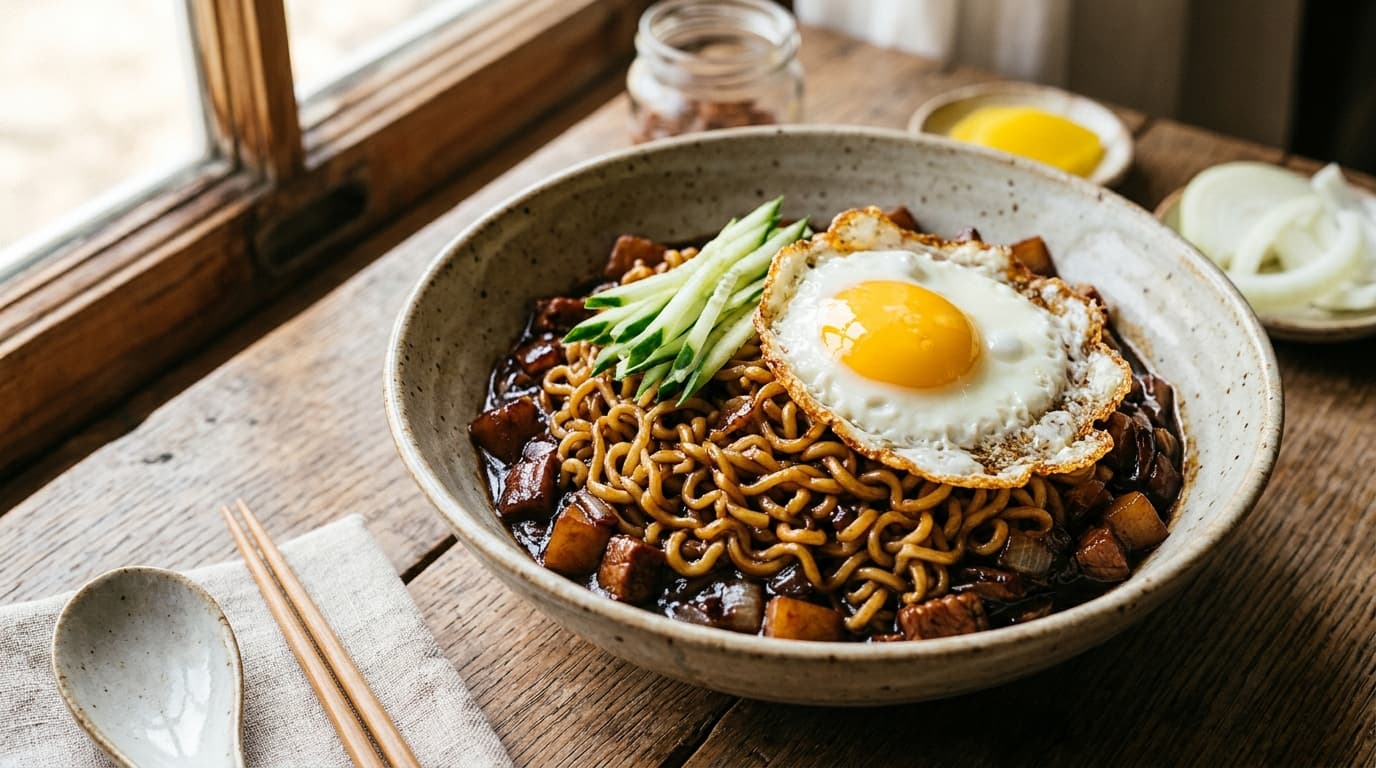
For many people outside Korea, the first time they heard of jjapaguri was in Bong Joon-ho's 2019 film Parasite. In one tense scene, the wealthy mother calls home and asks the housekeeper to make it, topped with Korean beef sirloin, in the few minutes before she arrives. The English subtitles called it ram-don, a made-up word blending ramen and udon, because the real name would have meant nothing to most viewers.
In Korea, jjapaguri was already a well-known home mash-up long before the film. The name is a blend of Chapagetti, a black bean jjajang ramyeon, and Neoguri, a thick-noodled spicy seafood ramyeon. Cook them together and you get savory, slightly sweet black bean noodles with a gentle seafood heat and two textures of noodle. Here is how to make the everyday version and the steak-topped version from the film.
What jjapaguri actually tastes like
Chapagetti on its own is a mild, sweet and savory black bean noodle dish. It is lovely, but some people find it a little one-note after a few bites. Neoguri brings what Chapagetti lacks: a hit of chili, a briny seafood depth and a piece of dried kelp that adds a quiet umami. Combined, the sauce stays dark and glossy like jjajang, but with a warm, spicy finish.
The texture is part of the appeal. Chapagetti noodles are medium-thin and springy, while Neoguri noodles are thick and chewy, closer to udon. Every forkful mixes the two. That contrast is probably what inspired the ram-don translation in the subtitles.
It is a stir-fried style dish rather than a soup. Most of the cooking water is drained, and what remains is reduced into a sauce that coats the noodles. The final dish should look shiny and saucy, not dry and not soupy.
Getting the seasoning ratio right
The one mistake almost everyone makes the first time is adding both full packets of powder. Neoguri's soup base is designed for about 550 ml of water. In jjapaguri you keep only a small amount of liquid, so the full packet makes the dish intensely salty.
The usual approach in Korea is to use all of the Chapagetti powder and oil, and somewhere between half and two thirds of the Neoguri soup powder. Use both packets of dried flakes and keep the kelp piece from the Neoguri, which adds flavor while the noodles cook.
- Mild and sweet: all Chapagetti powder, one third of Neoguri powder.
- Balanced, the most common choice: all Chapagetti powder, half of Neoguri powder.
- Spicier: all Chapagetti powder, two thirds of Neoguri powder, plus a pinch of gochugaru if you like.
Kitchen tip
Add the Neoguri powder in stages. Stir in half, taste a noodle, then decide whether to add more. You can always add, but you cannot take it out.
Water and timing
Because you are cooking two noodle blocks, you need more water than for one packet. About 1 liter in a medium pot works well. You will drain most of it anyway, so the exact amount matters less than in soup ramyeon, as long as the noodles have room to move.
Neoguri noodles are thicker and take a little longer, so many cooks drop the Neoguri block in first and add the Chapagetti block about 30 seconds later. Both packets suggest roughly 4 to 5 minutes, but check yours since cooking times can differ by market. Add both flake packets and the kelp at the start.
When the noodles are just tender, drain off most of the water, keeping roughly 150 ml, about 10 tablespoons, in the pot. This starchy cooking water is what turns the powder into a glossy sauce. Keep too much and it becomes a thin soup. Drain too much and the sauce turns clumpy and dry.
The everyday budget version
This is how most Koreans make jjapaguri at home on a weekend afternoon. It needs nothing beyond the two packets, and it serves two people or one very hungry one.
The everyday budget version
Ingredients
- 1 packet Chapagetti
- 1 packet Neoguri
- About 1 liter water
- Optional: 1 stalk green onion, sliced, or a fried egg for each serving
Method
- Bring about 1 liter of water to a rolling boil in a medium pot.
- Add both vegetable flake packets and the kelp piece from the Neoguri, then the Neoguri noodle block.
- After about 30 seconds, add the Chapagetti noodle block. Cook for about 4 minutes in total, loosening the noodles with chopsticks.
- Turn off the heat and carefully drain, leaving about 150 ml of water in the pot.
- Return the pot to low heat. Add all the Chapagetti powder and oil, plus about half of the Neoguri powder.
- Stir and toss for 30 to 60 seconds until the sauce thickens and coats the noodles evenly. Taste and add more Neoguri powder if you want more heat.
- Serve right away, topped with green onion or a fried egg.
The Parasite version with steak
In the film the dish is topped with hanu, premium Korean beef, which turns a cheap snack into something extravagant. That contrast is the point of the scene. At home, any tender steak works well: sirloin, ribeye or strip. You need about 150 g for two servings.
Kitchen tip
Sear the beef before you start the noodles. Steak benefits from a few minutes of rest, and the noodles should not wait for anything once they are sauced.
The Parasite version with steak
Ingredients
- 1 packet Chapagetti and 1 packet Neoguri
- About 1 liter water
- 150 g sirloin or ribeye steak, about 2 cm thick
- Salt and freshly ground black pepper
- 1 teaspoon neutral oil
- Optional: 1 small clove garlic, lightly crushed
Method
- Take the steak out of the fridge 15 minutes before cooking and pat it dry. Cut it into cubes of about 2 cm and season with salt and pepper.
- Heat a frying pan over high heat until very hot, add the oil and sear the beef cubes for about 2 to 3 minutes, turning them so all sides brown. Add the garlic for the last 30 seconds if using. Set the beef aside to rest.
- Cook the noodles exactly as in the budget version, draining to leave about 150 ml of water.
- Add the Chapagetti powder and oil and half of the Neoguri powder, and toss over low heat for 30 to 60 seconds.
- Add the seared beef and any resting juices, toss for 10 seconds just to combine, and serve immediately.
Common mistakes
Jjapaguri is forgiving, but a few habits reliably spoil it. Most of them come down to salt and water.
- Using the full Neoguri powder packet. The result is very salty. Start with half.
- Draining all the water. Without starchy liquid, the powder will not form a sauce and the noodles turn dry and patchy.
- Leaving too much water. If it looks like soup, keep it on medium heat and stir for another minute to reduce.
- Overcooking the beef. Small cubes cook fast. Two to three minutes on very high heat is enough for a browned outside and a pink center.
- Letting it sit. Like all stir-fried ramyeon, jjapaguri thickens and turns sticky as it cools. Plate it straight away.
What to serve with it
Jjapaguri is rich and a little sweet, so it pairs best with something sour and crunchy. In Korea that usually means danmuji, the bright yellow pickled radish served with jjajangmyeon, or a small dish of cold kimchi. A few slices of raw onion dipped in a little vinegar are another classic jjajang companion.
A fried egg with a runny yolk is the most popular extra topping. Break the yolk and toss it through the noodles for an even silkier sauce. Some people also add a slice of cheese for a very rich version, though at that point it is a long way from the film.
How to Make Jjapaguri (Ram-Don) from Parasite
Step-by-step video guide for making Jjapaguri (Ram-Don), the iconic Chapagetti and Neoguri combination with steak.
Final takeaway
Jjapaguri shows how Korean home cooks treat instant noodles: as ingredients to play with rather than finished products. Get the seasoning ratio and the reserved water right and the everyday version is excellent on its own. Add a few cubes of seared steak and you have the dish from Parasite, a bowl that is cheap and luxurious at the same time.
Featured ramyeon in this guide
Noodles that pair best with these techniques and recipes.
Nongshim
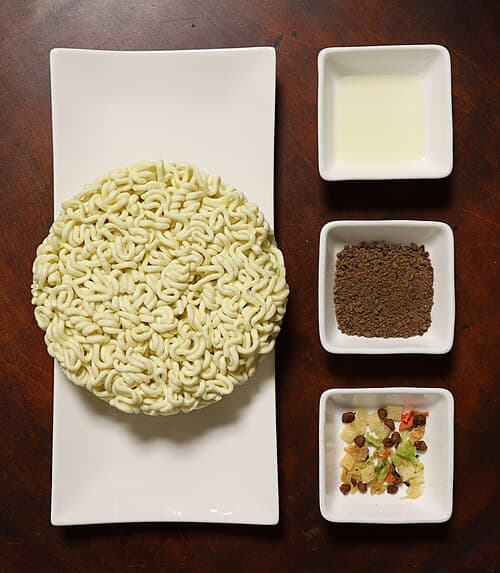
Chapagetti
Instant jjajangmyeon: glossy black bean noodles with zero spice.
Nongshim
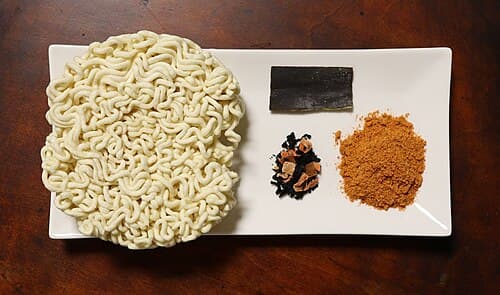
Neoguri (Spicy Seafood)
Thick, chewy noodles in a spicy seafood broth, with a real piece of kelp.
Nongshim
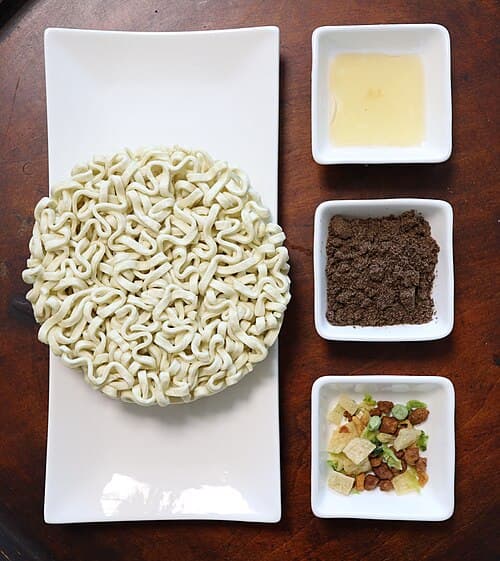
Nongshim Jjawang
Thick noodles and a rich black bean sauce aiming for restaurant jjajangmyeon.
More in Recipe
Cheese Ramyeon: The Korean Snack-Bar Classic
How to make chijeu ramyeon like a Korean bunsik snack bar: which cheese melts best, which noodles to use, exact timing, and fixes for greasy or grainy soup.
7 min read
Budae Jjigae (Army Stew) with Ramyeon Noodles
A home recipe for budae jjigae, Korean army stew with Spam, sausage, kimchi, tofu and ramyeon noodles, plus the sauce ratio, pot setup and when to add noodles.
8 min read
Cold Ramyeon for Hot Days: Bibim-myeon and Easy Variations
How to make chilled bibim-myeon properly, plus easy cold ramyeon variations with cucumber, kimchi and homemade sauce for the hottest days of summer.
7 min read