
Nongshim · Soup ramyeon
·★4.9(162 reviews)Nongshim Yukgaejang Sabalmyun
육개장 사발면 (Yukgaejang Sabalmyeon)
The humble bowl noodle every Korean has eaten at a convenience store counter.
- Heat
- 2/5
- Cook
- 3′
- Water
- 380ml
- Calories
- 375kcal
What Nongshim Yukgaejang Sabalmyun tastes like
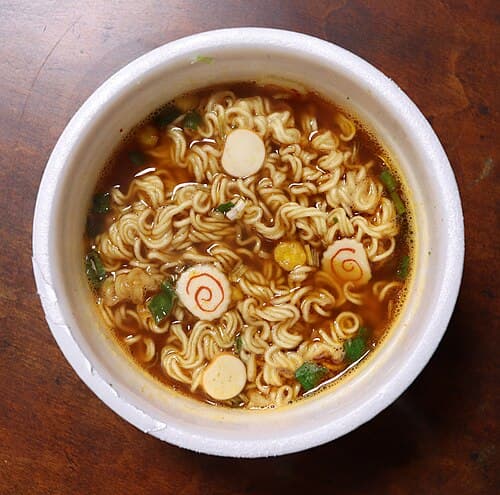
Yukgaejang is a hearty Korean soup of shredded beef, green onion and chili, and this bowl noodle takes its flavor as a starting point. The broth is savory and peppery with a light red chili warmth that sits at the back of the throat rather than on the tongue. It is not trying to be a restaurant yukgaejang; it is lighter, saltier and more straightforward. That simplicity is part of the charm. The first sip tastes familiar in a way that is hard to explain until you have had it a few dozen times.
The noodles are thin and fine, designed to soften with nothing more than boiling water and a few minutes under the lid. They are softer and more delicate than bag ramyeon, almost silky, and they drink up the broth quickly. That means timing matters: eat it right after the wait and the strands still have a gentle bite, but leave it for ten minutes and they go limp. The small dried vegetable pieces, mostly green onion, rehydrate into soft, sweet little flecks.
Sabal refers to a wide bowl, and the squat, round cup shape is the reason for the name. For many Koreans this is the default cup noodle: the one eaten at a convenience store table with a triangle gimbap, the one shared during military service, the one that appears at study halls and late-night offices. It has been around for decades and still sells strongly, partly from habit and partly because nothing quite replaces it. Ask a Korean friend about it and you will likely get a story.
Try it if you want to understand everyday Korean food culture rather than restaurant food, or if you need a fast, low-effort meal with a little warmth. It is a gentle introduction to Korean chili for people who find Shin Ramyun too strong. It also suits travelers, students and office workers with only a kettle. If you are very hungry, one bowl may feel small; pair it with gimbap or a bowl of rice like Koreans do.
How to cook it
Based on typical package directions (about 380 ml water, 3 minutes). Recipes vary by country, so check your package.
- 1
Peel the lid back about halfway and take out the soup packet. Leave the noodles and dried vegetables in the bowl.
- 2
Sprinkle the soup powder over the noodles.
- 3
Pour freshly boiled water up to the inner fill line, roughly 350 to 400 ml depending on the bowl. Water that has cooled off the boil leaves the noodles stiff.
- 4
Close the lid and press it down, or weigh it with chopsticks or a phone, and wait about 3 minutes. Check the lid for the exact time in your market.
- 5
Open, stir well from the bottom so the seasoning dissolves, and eat right away before the thin noodles soften too much.
How to make Nongshim Yukgaejang Sabalmyun even better
Do the convenience store combo
The classic Korean pairing is a triangle gimbap, a rice ball wrapped in seaweed, eaten alongside. Take a bite of rice, then a sip of broth, or break the gimbap into the last of the soup. Tuna mayo and spicy pork are popular fillings. If you cannot find triangle gimbap, a small bowl of rice with a sheet of roasted seaweed works well.
Add a slice of cheese
Lay one slice of processed cheese on top right after stirring and close the lid for 30 seconds. The cheese melts into the broth and makes it creamier and slightly milder. It is a common late-night trick in Korea and works especially well if you find the broth too salty. Stir gently so the cheese ribbons through instead of clumping in one spot.
Bring kimchi or a boiled egg
Since you are only using hot water, prep toppings ahead. A few pieces of well-fermented kimchi add crunch and tang, and a halved hard-boiled egg turns the bowl into a light meal. Add them after the three-minute wait so the broth stays hot. Avoid raw egg, which will not cook through in a paper bowl.
Keep the water truly boiling
Thin cup noodles depend on heat. Pour the water within a few seconds of the kettle switching off, and pour it in a steady stream rather than in stops and starts. If you are using a hot water dispenser that runs below boiling, add an extra minute under the lid. Never microwave the bowl unless the packaging clearly says it is safe.
Related guides
How Koreans Actually Eat Ramyeon
From eating off the pot lid to Han River cooking machines and rice in the leftover broth, here is how Koreans really eat instant ramyeon day to day.
7 min read
Cheese Ramyeon: The Korean Snack-Bar Classic
How to make chijeu ramyeon like a Korean bunsik snack bar: which cheese melts best, which noodles to use, exact timing, and fixes for greasy or grainy soup.
7 min read
Buying Korean Ramyeon Abroad: How to Read the Package
Learn the key Korean words on ramyeon packages, how multipacks and cups differ, where to buy outside Korea, how to store them and how to choose by taste.
8 min read
If you like Nongshim Yukgaejang Sabalmyun, try
Nongshim
Shin Ramyun Black
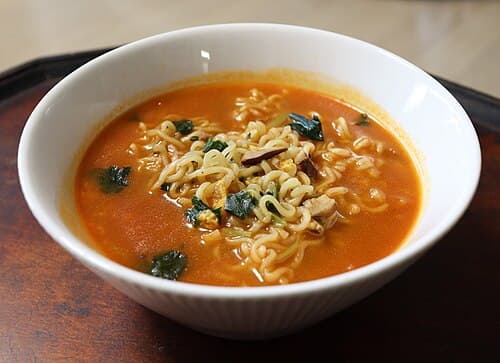
Shin Ramyun with a beef bone broth packet: rounder, richer and a bit gentler.
Nongshim
Neoguri (Spicy Seafood)
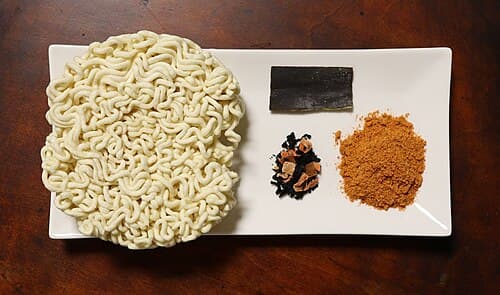
Thick, chewy noodles in a spicy seafood broth, with a real piece of kelp.
Samyang
Samyang Ramen
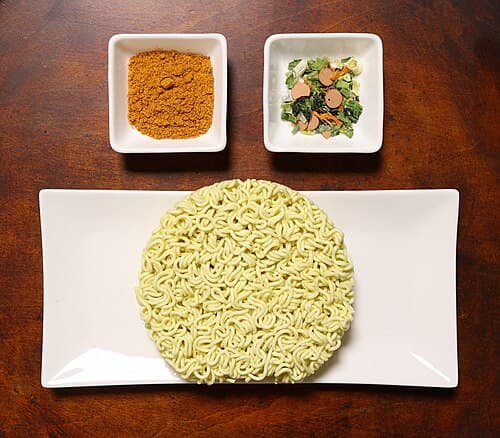
The descendant of Korea's very first instant ramyeon, from 1963.