
Cheese Ramyeon: The Korean Snack-Bar Classic
How to make chijeu ramyeon like a Korean bunsik snack bar: which cheese melts best, which noodles to use, exact timing, and fixes for greasy or grainy soup.
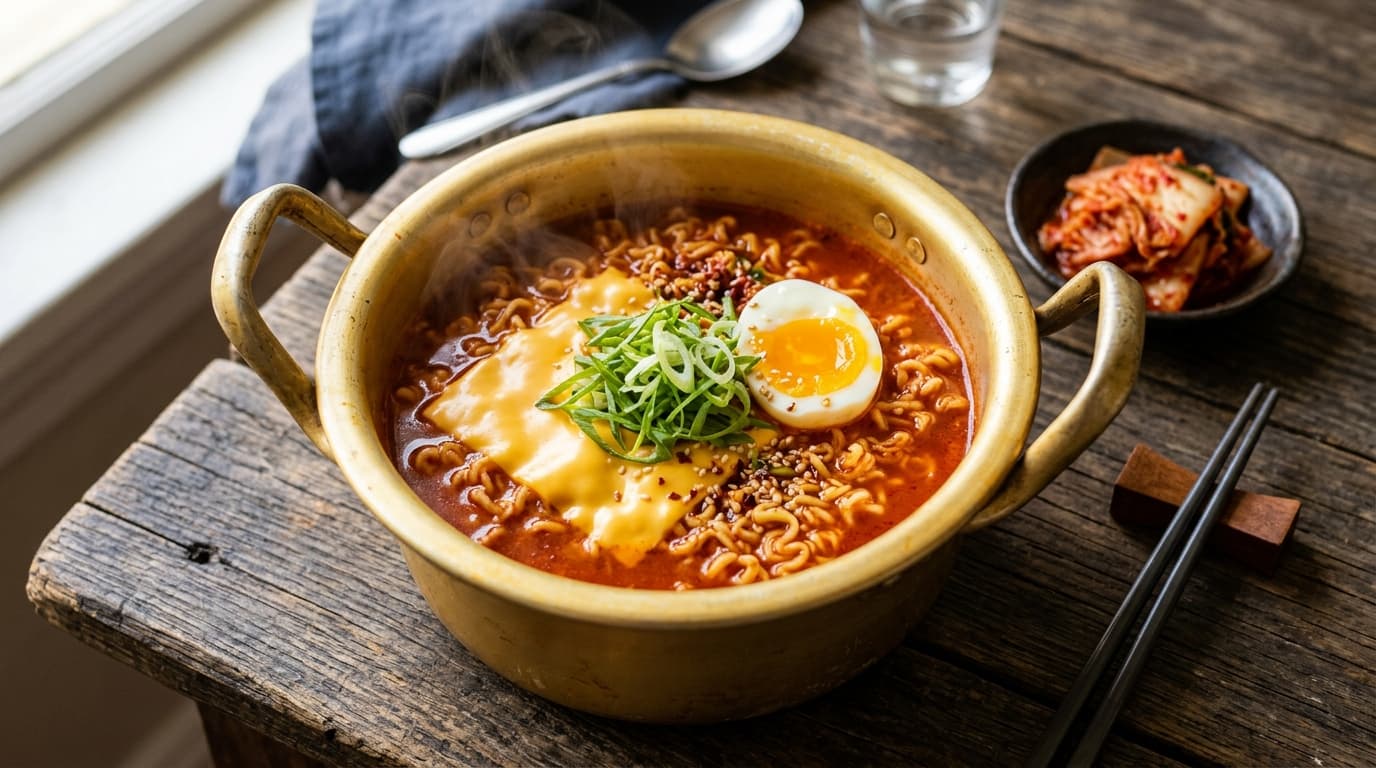
Walk into almost any bunsikjip in Korea, the small snack bars that sell gimbap, tteokbokki and noodles, and you will find chijeu ramyeon (cheese ramyeon) on the menu wall. It is usually just a regular spicy ramyeon with a slice of processed cheese melting on top, sometimes with an egg. It costs a little more than plain ramyeon and is ordered constantly by students, office workers and anyone who wants something comforting and fast.
It sounds almost too simple to need a recipe, and in a way it is. But the difference between a great bowl and a greasy, salty one comes down to a few choices: the right cheese, the right noodles, and adding it at the right moment. Here is how snack bars do it, and how to fix things when it goes wrong.
Why cheese and spicy soup work together
Spicy Korean ramyeon broth is salty, peppery and quite sharp. A slice of cheese adds fat and a gentle milky sweetness that rounds off those edges. The heat feels softer, the soup feels thicker and richer, and the noodles come out of the bowl coated in a creamy, orange-tinted layer.
This is the same reason cheese shows up in so many Korean comfort foods, from cheese tteokbokki to budae jjigae and cheese buldak. Dairy is a very common way to tame chili heat in Korean cooking, and the pairing of red chili and melted cheese has become a flavor many Koreans grew up with.
It also changes texture. Once the cheese melts into the broth, the soup clings to the noodles instead of running off them, so every mouthful carries more flavor. That is why one slice goes further than you might expect.
Choosing the cheese
Snack bars almost always use individually wrapped processed cheese slices, the same type you would put on a burger. Koreans just call it seullaiseu chijeu (slice cheese). It contains emulsifying salts that help it melt smoothly into hot liquid without separating, which is exactly what you want in a soup.
Other cheeses can work, but they behave differently.
- Processed slice: melts evenly, slightly salty, the classic choice. One slice per packet.
- Mozzarella: stretchy and mild, great for stir-fried types like Buldak. In soup it tends to form a single rubbery clump, so use about 30 g, shredded, and do not stir it hard.
- Aged cheddar or Parmesan: strong flavor, but they often split into oily, grainy bits in hot broth. Better grated on top in small amounts than melted in.
- Cream cheese: about 1 tablespoon makes a very creamy, tangy soup. Not traditional, but popular with people who like rosé-style flavors.
Kitchen tip
If you want both melt and stretch, use one processed slice plus a small pinch of shredded mozzarella.
Which ramyeon to use
Cheese is best with spicy, beef or chili-based soups that have enough strength to stand up to it. A delicate or mild broth can become flat and heavy once cheese goes in.
Shin Ramyun is the most common snack-bar base and a great starting point. Jin Ramen Spicy works well too, and its slightly sweeter broth makes a very kid-friendly cheese ramyeon. Neoguri, with its thick noodles and seafood notes, holds up well to cheese and gives a heartier bowl. For a stir-fried version, Buldak with mozzarella is popular, though be warned that cheese softens the heat only a little; it is still very hot.
Mild ramyeon like Jin Ramen Mild can still be used, but consider using a little less water so the broth is stronger before the cheese goes in.
The snack-bar recipe
This is the basic bunsikjip version with an egg, which is how it is most often served. It makes one generous bowl.
The snack-bar recipe
Ingredients
- 1 packet spicy soup ramyeon, such as Shin Ramyun
- 500 ml water (about 50 ml less than the usual 550 ml)
- 1 slice processed cheese
- 1 egg
- 1/2 stalk green onion, thinly sliced
- Optional: a pinch of shredded mozzarella, a few slices of rice cake
Method
- Bring 500 ml of water to a rolling boil in a small pot.
- Add the soup powder and vegetable flakes, then the noodle block.
- Cook for about 3 minutes, lifting the noodles with chopsticks a few times to loosen them.
- Crack the egg into the center and leave it undisturbed for about 1 minute so the white sets.
- Turn off the heat. Lay the cheese slice on top of the noodles, not in the broth, and scatter over the green onion.
- Wait 30 to 40 seconds until the cheese softens and starts to drape over the noodles.
- Serve right away. Stir the cheese into the soup at the table, a little at a time as you eat.
Timing and why the water is reduced
The two details in that recipe that people skip are the reduced water and the cheese going in after the heat is off. Both matter.
Cheese adds richness, but it also mutes flavor slightly, so a soup that tasted perfectly seasoned before can feel a little dull after. Using about 50 ml less water keeps the broth bold enough to carry the cheese. If you prefer a lighter soup, use the full amount and simply add half a slice.
Adding cheese to a hard, rolling boil is the main reason it turns greasy. The fat separates from the proteins and floats on top as an orange oil slick. Resting it on top of the noodles off the heat lets it soften gently, then it blends into the soup as you stir. Placing it on the noodles rather than straight into the broth also keeps a creamy layer on top that snack bars are known for.
Variations worth trying
Once the basic method feels familiar, these are the versions you will see most often in Korea and online. All of them use the same rule: cheese goes in last, off a rolling boil.
- Double cheese: two slices for a very rich, almost sauce-like soup. Reduce water to 450 ml.
- Cheese and rice cakes: add a handful of soaked tteok with the noodles for a dish close to rabokki, the ramyeon and tteokbokki mash-up.
- Cheese and kimchi: 40 g of chopped sour kimchi cooked with the noodles. The sour, salty kimchi and creamy cheese are a very Korean combination.
- Milk-cheese ramyeon: replace 100 ml of the water with milk and add one slice. Creamy, mild and good for anyone who finds Shin Ramyun too hot.
- Cheese Buldak: cook Buldak as the packet directs, toss with the sauce, then top with 30 to 40 g of mozzarella and cover for 1 minute to melt.
Troubleshooting
Most problems come from the cheese getting too hot or the broth being too salty to begin with.
- Oily orange layer on top: the cheese was added at a boil. Next time, turn off the heat first.
- Grainy, broken cheese: the cheese was a hard aged type, or it was stirred in too fast. Use a processed slice and fold it in slowly.
- Too salty: cheese adds salt too. Use about three quarters of the soup powder and taste before adding the rest.
- Flat or bland: too much water for the amount of cheese. Cut back the water by 50 ml.
- Mozzarella clumped into a ball: use less, shred it finely, and serve without heavy stirring.
Final takeaway
Cheese ramyeon is one of those dishes that every Korean has made at midnight at least once, and it is worth learning properly because it is so forgiving. Use a spicy base, a processed slice, slightly less water, and add the cheese off the heat. Once you have that down, play with mozzarella, rice cakes or kimchi until you find the snack-bar bowl you want to come back to.
Featured ramyeon in this guide
Noodles that pair best with these techniques and recipes.
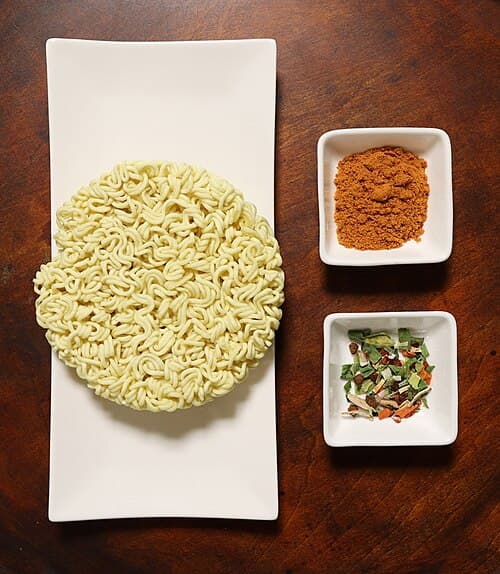
Nongshim
Shin Ramyun
The red-packet classic that set the bar for spicy Korean ramyeon.
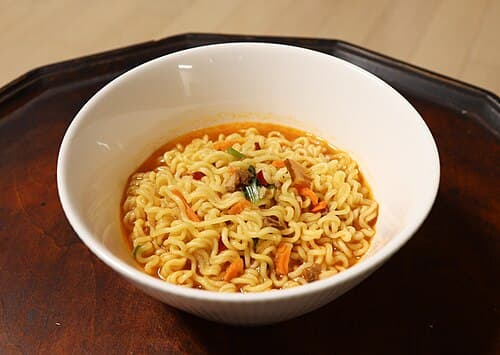
Ottogi
Jin Ramen Spicy
The red Jin Ramen: a punchy, savory rival to Shin Ramyun.
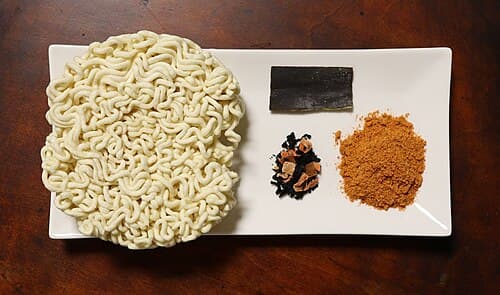
Nongshim
Neoguri (Spicy Seafood)
Thick, chewy noodles in a spicy seafood broth, with a real piece of kelp.
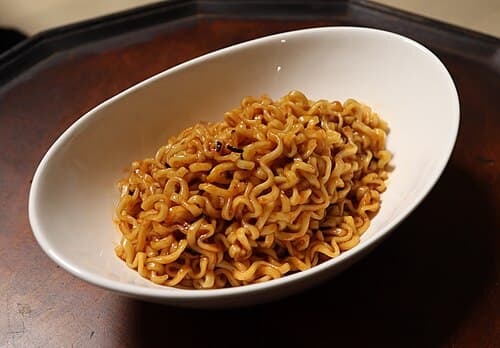
Samyang
Buldak Hot Chicken Flavor Ramen
The famously fiery stir-fried noodle that launched a thousand challenge videos.
More in Recipe
Jjapaguri (Ram-Don) from Parasite: How to Make It at Home
Make jjapaguri, the Chapagetti and Neoguri mash-up from Parasite, at home: the seasoning ratio, water and timing, a budget version and a steak-topped version.
8 min read
Budae Jjigae (Army Stew) with Ramyeon Noodles
A home recipe for budae jjigae, Korean army stew with Spam, sausage, kimchi, tofu and ramyeon noodles, plus the sauce ratio, pot setup and when to add noodles.
8 min read
Cold Ramyeon for Hot Days: Bibim-myeon and Easy Variations
How to make chilled bibim-myeon properly, plus easy cold ramyeon variations with cucumber, kimchi and homemade sauce for the hottest days of summer.
7 min read