
Budae Jjigae (Army Stew) with Ramyeon Noodles
A home recipe for budae jjigae, Korean army stew with Spam, sausage, kimchi, tofu and ramyeon noodles, plus the sauce ratio, pot setup and when to add noodles.
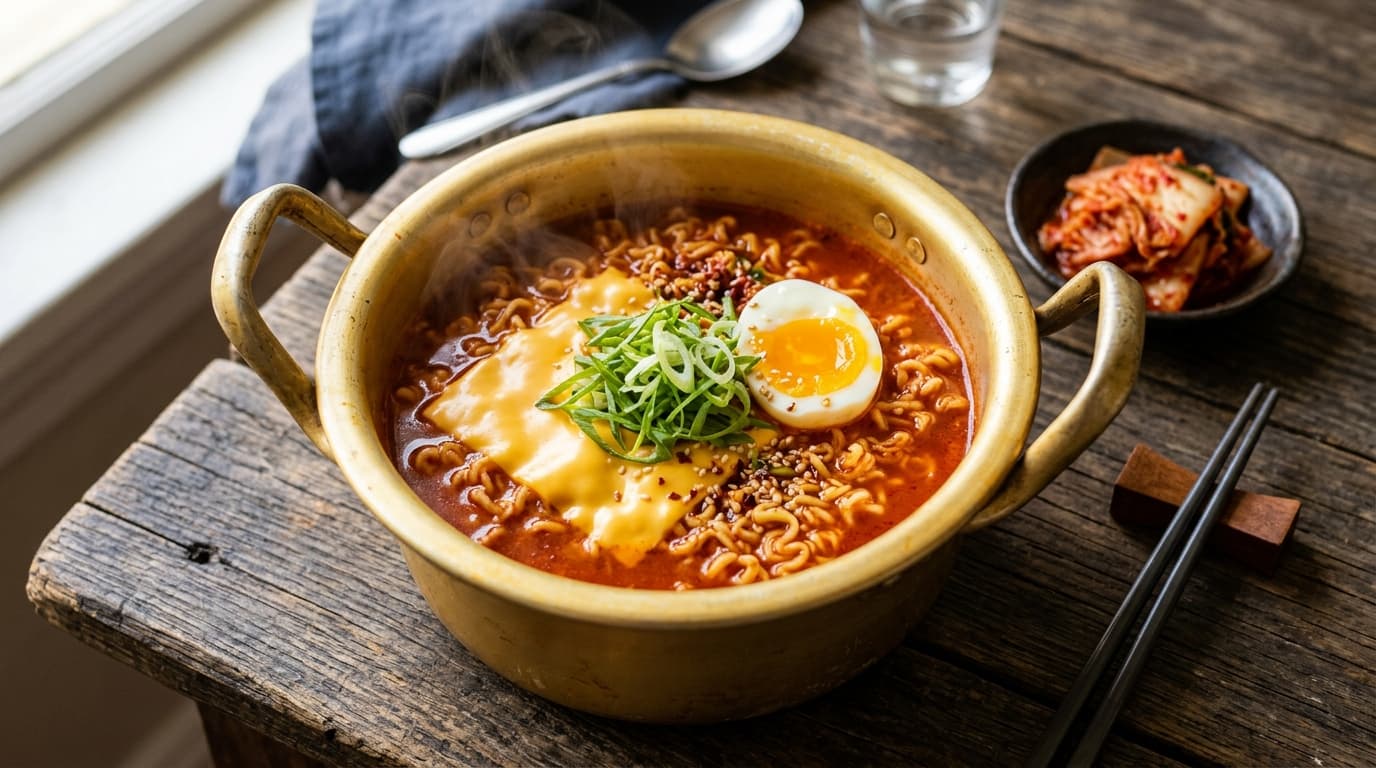
Budae jjigae is a big, bubbling, red stew full of Spam, sausages, kimchi, tofu and instant noodles, usually cooked in a shallow pot on a portable burner in the middle of the table. Budae means military unit and jjigae means stew, so it is often called army stew in English. It is loud, generous food meant for sharing, and in Korea it is a favorite for group dinners, cold evenings and nights with friends.
Instant ramyeon noodles are not just an optional extra here. For many Koreans, the noodles soaking up the spicy, meaty broth are the best part of the meal. This guide covers a little background, the ingredients, a balanced sauce, and the right moment to add the noodles so they are chewy rather than swollen.
A short, respectful history
Budae jjigae grew out of a difficult period. In the years after the Korean War, food was scarce, and processed meats such as ham, sausages and canned goods from around US military bases found their way into local markets. Korean cooks combined these unfamiliar ingredients with familiar ones, especially kimchi, gochujang and chili, and created a stew that was filling and full of flavor.
Over the decades it changed from a dish born of necessity into a beloved comfort food. Instant noodles, cheese and baked beans became common additions, and many regional styles developed. The city of Uijeongbu, north of Seoul, is especially known for it and has a street of restaurants dedicated to budae jjigae.
For many older Koreans the dish still carries memories of hard times, while younger people mostly think of it as a fun, hearty meal to share. Both are part of its story, and it is worth knowing that background when you cook it.
The ingredients
Budae jjigae is flexible, and every restaurant has its own lineup. These are the most common components. Do not worry if you are missing one or two.
- Spam or canned ham: the core flavor. About 150 g, sliced 5 mm thick.
- Hot dog sausages: 2 to 3, sliced diagonally.
- Kimchi: about 150 g of well-fermented, sour kimchi, roughly chopped.
- Tofu: half a block, about 150 g, sliced.
- Instant ramyeon noodles: 1 block. Plain noodle blocks sold as ramyeon sari are ideal, or use any packet.
- Vegetables: a small onion, a stalk or two of green onion, a handful of mushrooms.
- Extras: a few tablespoons of baked beans, a handful of rice cakes, a slice of processed cheese, some ground pork or beef.
Kitchen tip
Older, sour kimchi is best here. Its tang balances the saltiness and richness of the processed meats.
Broth and sauce
Restaurants often use a beef bone or anchovy-kelp stock, but at home a light chicken stock or even plain water works, since the meats and kimchi bring plenty of flavor. You need about 600 to 700 ml of liquid for two to three servings.
The sauce is mixed separately and placed on top of the ingredients so it melts into the stew as it boils. This mix gives a balanced, savory heat:
- 2 tablespoons gochugaru (Korean chili flakes)
- 1 tablespoon gochujang (Korean chili paste)
- 1 tablespoon soy sauce
- 1 tablespoon minced garlic
- 1 teaspoon sugar
- A pinch of black pepper
- 1 tablespoon of kimchi juice if you have it
Setting up the pot
The look of budae jjigae is part of the meal. Use a wide, shallow pot, around 24 to 26 cm across, and arrange the ingredients in neat sections around the edge before adding any liquid: Spam, sausages, kimchi, tofu, onions and mushrooms, each in its own group. Put the sauce in a mound in the center, and leave space where the noodles will go later.
If you have a portable gas burner, set it on the table and cook everything there. Everyone watches it come to a boil, and people help themselves as it cooks. If not, cook it on the stove and bring the whole pot to the table on a trivet.
Pour the stock gently down the side of the pot so you do not wash the sauce off the top. Then bring everything to a boil over medium-high heat.
Home budae jjigae recipe
This version serves two to three people as a main dish, or more as part of a shared spread with rice.
Home budae jjigae recipe
Ingredients
- 150 g Spam, sliced 5 mm thick
- 2 to 3 hot dog sausages, sliced diagonally
- 150 g sour kimchi, chopped
- 150 g tofu, sliced
- 1/2 onion, sliced, and 1 stalk green onion, cut into 5 cm lengths
- A handful of mushrooms and 2 tablespoons baked beans (optional)
- 1 block instant ramyeon noodles
- 1 slice processed cheese
- 600 to 700 ml light stock or water
- Sauce: 2 tbsp gochugaru, 1 tbsp gochujang, 1 tbsp soy sauce, 1 tbsp minced garlic, 1 tsp sugar, pinch of pepper
Method
- Mix the sauce ingredients in a small bowl.
- Arrange the Spam, sausages, kimchi, tofu, onion, mushrooms and beans in sections in a wide, shallow pot. Put the sauce in the center.
- Pour the stock gently down the side of the pot. Bring to a boil over medium-high heat, then simmer for 8 to 10 minutes so the kimchi softens and the flavors mingle.
- Taste the broth. If it needs salt, add a little soy sauce or a pinch of the ramyeon soup powder.
- Add the noodle block and the green onion. Cook for about 3 to 4 minutes, loosening the noodles as they soften.
- Lay the cheese slice on top of the noodles, turn the heat down low, and serve straight from the pot.
When and how to add the noodles
The noodles go in last, only once the broth has simmered and tastes right. Added too early, they soak up a huge amount of liquid and turn soft and swollen, and the stew becomes thick and starchy before anyone has started eating.
Cook them for about a minute less than the packet suggests. The stew stays hot on the burner, and the noodles keep cooking as people serve themselves. If you are using a full ramyeon packet instead of a plain noodle block, you can use some of its soup powder to season the stew, but start with a third or half, since the sauce already has plenty of salt.
In a big group, cook the noodles in two rounds. Add one block, let everyone eat, and add the second once the pot has been topped up with a little more stock.
Kitchen tip
If the broth gets too thick as the noodles cook, add 100 ml of hot water or stock and bring it back to a simmer.
Finishing the pot
Budae jjigae is almost always eaten with a bowl of steamed rice, which balances the salty, spicy broth. Some people spoon broth over their rice; others take bites of each in turn.
Leftover broth is excellent the next day, but the noodles will not survive overnight, so eat them first. To reheat, bring the remaining stew back to a boil and add a fresh noodle block or some cooked rice to make a thick, porridge-like finish. Store leftovers in the fridge and eat them within a day or two.
Final takeaway
Budae jjigae is the opposite of fussy cooking. Slice some processed meats, grab sour kimchi and tofu, mix a simple chili sauce, and let it all bubble together. Just remember to add the ramyeon noodles at the end and take them off a little early. The result is a pot that shows how Korean cooks made something warm and lasting out of what they had.
Featured ramyeon in this guide
Noodles that pair best with these techniques and recipes.
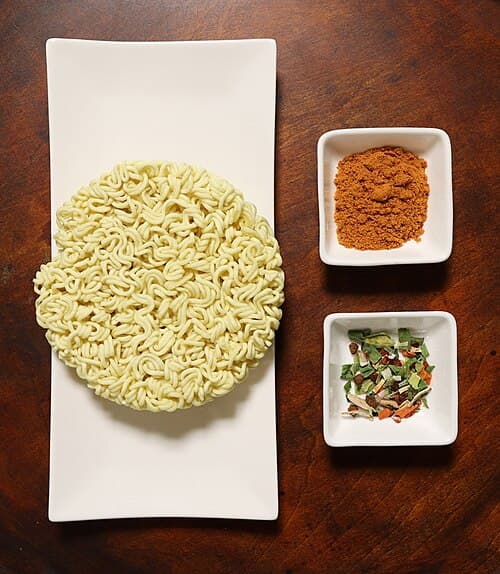
Nongshim
Shin Ramyun
The red-packet classic that set the bar for spicy Korean ramyeon.
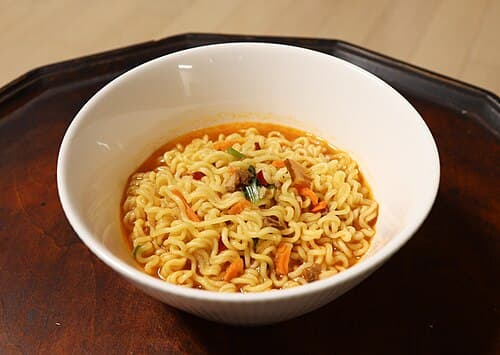
Ottogi
Jin Ramen Spicy
The red Jin Ramen: a punchy, savory rival to Shin Ramyun.
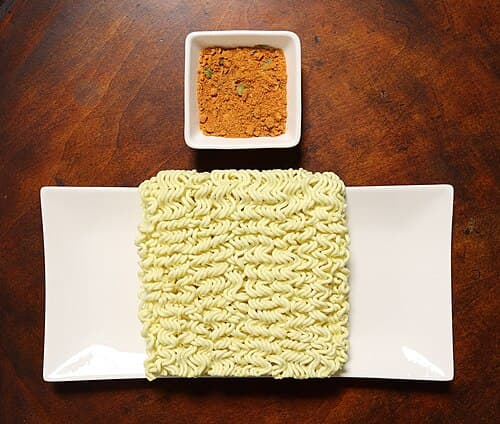
Nongshim
Nongshim Kimchi Ramyun
Tangy, garlicky kimchi broth for when you want sour and spicy in one bowl.
More in Recipe
Cheese Ramyeon: The Korean Snack-Bar Classic
How to make chijeu ramyeon like a Korean bunsik snack bar: which cheese melts best, which noodles to use, exact timing, and fixes for greasy or grainy soup.
7 min read
Jjapaguri (Ram-Don) from Parasite: How to Make It at Home
Make jjapaguri, the Chapagetti and Neoguri mash-up from Parasite, at home: the seasoning ratio, water and timing, a budget version and a steak-topped version.
8 min read
Cold Ramyeon for Hot Days: Bibim-myeon and Easy Variations
How to make chilled bibim-myeon properly, plus easy cold ramyeon variations with cucumber, kimchi and homemade sauce for the hottest days of summer.
7 min read