
Nongshim · Soup ramyeon
·★4.7(127 reviews)Nongshim Kimchi Ramyun
김치라면 (Gimchi Ramyeon)
Tangy, garlicky kimchi broth for when you want sour and spicy in one bowl.
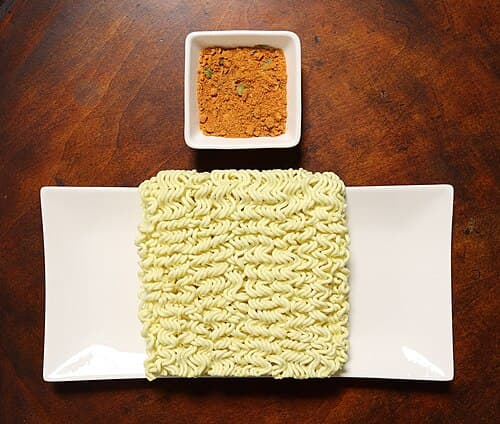
- Heat
- 3/5
- Cook
- 4.5′
- Water
- 550ml
- Calories
- 480kcal
What Nongshim Kimchi Ramyun tastes like
Most spicy Korean ramyeon lean on beef or mushroom for depth. Kimchi Ramyun leans on sourness instead. The broth has a clear fermented tang, a good hit of garlic, and a medium chili heat that feels brighter and sharper than a beef-based soup. The dried kimchi flakes rehydrate into small, soft pieces of cabbage that taste mildly sour. It reminds many Koreans of a quick kimchi jjigae, the everyday kimchi stew, though it is lighter and less funky than the real thing.
The noodles are classic Nongshim round noodles, medium thick and springy, very similar to what you find in Shin Ramyun. They hold their chew well in the acidic broth, which is a small advantage; sour soups tend to keep noodles firm a little longer. Around four and a half minutes they are bouncy with a slightly glossy surface. The kimchi pieces are soft rather than crunchy, so if you like texture, adding fresh kimchi makes a big difference.
Kimchi and ramyeon are inseparable in Korea. Almost nobody eats ramyeon without kimchi on the side, so a ramyeon with kimchi built into the broth makes perfect sense. This one is especially handy abroad, where not every kitchen has a jar of kimchi in the fridge. When Koreans do have kimchi at home, the habit is to add some of the older, sourer kimchi straight into the pot, which turns the bowl into something close to a homemade stew.
Try it if you already like kimchi and want that flavor in soup form, or if beef-based broths taste a bit heavy to you. It is a good choice for people who enjoy sour-spicy food such as hot and sour soup or tom yum. If you have never had kimchi, the fermented tang may surprise you at first, but it is a gentle and approachable version. Pair it with rice and you have a complete, warming meal.
How to cook it
Based on typical package directions (about 550 ml water, 4.5 minutes). Recipes vary by country, so check your package.
- 1
Bring about 550 ml of water to a boil in a medium pot.
- 2
Add the soup powder and the dried kimchi flake packet first, so the flakes start rehydrating while the water returns to a boil.
- 3
Add the noodles and cook for about 4 to 5 minutes, following the package for your market.
- 4
Lift and loosen the noodles with chopsticks once or twice so air reaches them and they stay springy.
- 5
Taste the broth near the end. If you plan to add fresh kimchi, add it now and let it simmer for the last minute.
- 6
Serve immediately in a deep bowl, with rice on the side if you want to finish the broth.
How to make Nongshim Kimchi Ramyun even better
Add older, sour kimchi
Kimchi that has been in the fridge for a few weeks and turned properly sour, called mugeunji when it is very aged, is perfect here. Chop a small handful and add it with the noodles, plus a tablespoon of the kimchi juice. Fresh, crunchy kimchi is better served on the side, since its flavor is too mild to change the broth.
Make it a quick kimchi jjigae
Fry 50 to 80 g of sliced pork belly or shoulder in the dry pot for two minutes until the fat renders, add chopped kimchi and fry one more minute, then add the water and continue as usual. Cubes of tofu added with the noodles make it even closer to kimchi stew. Reduce the soup powder slightly if the pork and kimchi make it salty.
Use Spam for a budae-style bowl
Sliced Spam or hot dog sausage turns the bowl into a mini budae jjigae, the army stew built from ramyeon, kimchi and processed meat. Cut a few thin slices and add them with the noodles. The salty, fatty meat balances the sourness nicely. Finish with a slice of cheese if you like the creamy version many Koreans order at budae jjigae restaurants.
Finish with green onion and an egg
Crack an egg into the pot with a minute left and leave it alone so the yolk stays soft, then scatter sliced green onion on top. The yolk mellows the acidity, and the raw onion adds freshness. If you prefer egg ribbons, beat the egg first and pour it slowly in a circle over the boiling soup, waiting ten seconds before stirring.
Related guides
Budae Jjigae (Army Stew) with Ramyeon Noodles
A home recipe for budae jjigae, Korean army stew with Spam, sausage, kimchi, tofu and ramyeon noodles, plus the sauce ratio, pot setup and when to add noodles.
8 min read
15 Toppings That Make Any Korean Ramyeon Better
From egg and cheese to kimchi, mandu, Spam and gim, here are 15 ramyeon toppings with exactly when and how to add each one so nothing turns soggy or overcooked.
8 min read
How to Cook Korean Instant Ramyeon the Right Way
Water amounts, pot choice, when to add the powder and flakes, exact timing and the noodle-lifting trick Korean home cooks use for chewy, well-seasoned ramyeon.
7 min read
If you like Nongshim Kimchi Ramyun, try
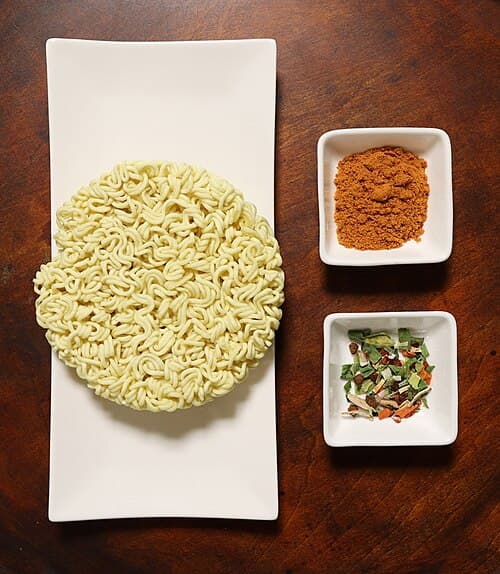
Nongshim
Shin Ramyun
The red-packet classic that set the bar for spicy Korean ramyeon.
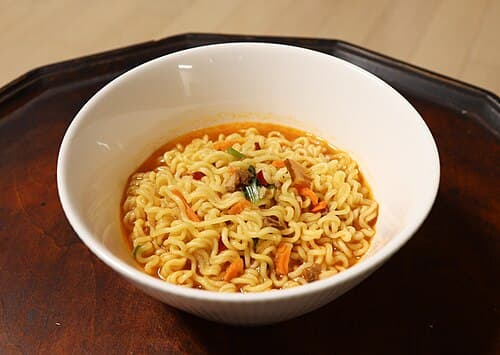
Ottogi
Jin Ramen Spicy
The red Jin Ramen: a punchy, savory rival to Shin Ramyun.
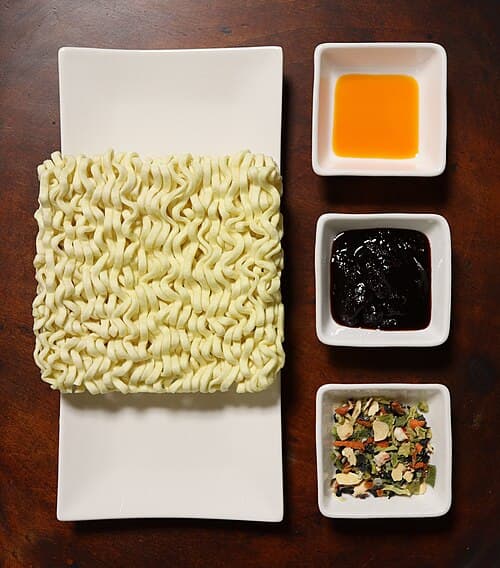
Ottogi
Ottogi Jin Jjambbong
Korean-Chinese spicy seafood soup with a smoky, wok-fired edge.