
15 Toppings That Make Any Korean Ramyeon Better
From egg and cheese to kimchi, mandu, Spam and gim, here are 15 ramyeon toppings with exactly when and how to add each one so nothing turns soggy or overcooked.
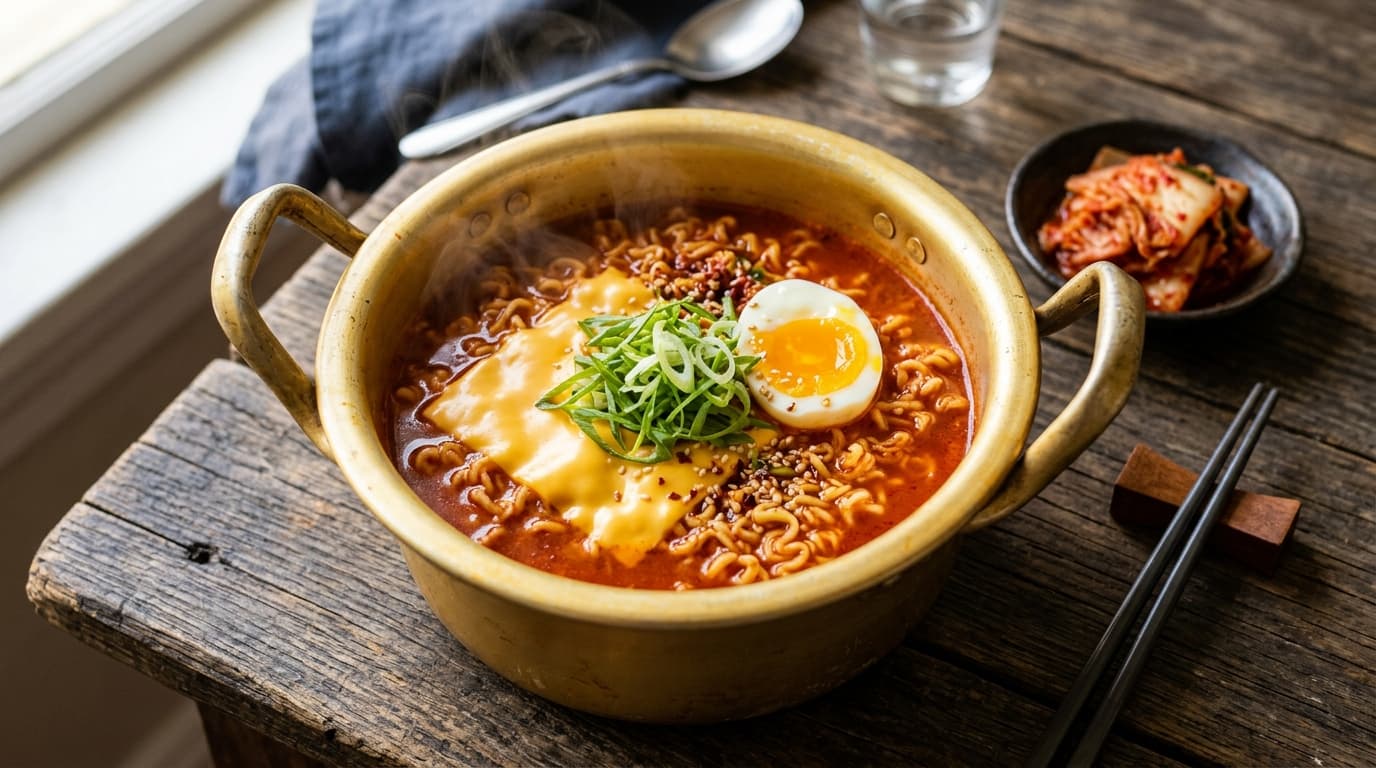
A plain packet of Korean ramyeon is already a complete meal, but very few Koreans eat it completely plain. Open the fridge in any Korean home late at night and you will see someone grabbing a green onion, an egg, a slice of cheese or the last few pieces of kimchi before they turn on the stove. Toppings are how one packet becomes your own bowl.
The trick is timing. A topping added at the wrong moment either stays raw and cold or turns into mush, and some toppings change the soup itself. Below are 15 toppings that work with most soup ramyeon, grouped by type, with when to add them and how much to use. Quantities are for one standard packet in about 500 to 550 ml of water.
Eggs and dairy
These three are the most common upgrades in Korea, and they all go in near the end. Eggs and dairy soften the heat of spicy ramyeon and add body to the broth, so they are a good place to start if a packet is a little too fiery for you.
- Gyeran (egg). Crack one in during the last minute. Leave it whole for a soft poached yolk, or stir it through for silky ribbons and a milder soup. There are several ways to do this, and we cover six in our egg guide.
- Cheese. One slice of processed American-style cheese, laid on top right after you turn off the heat. Wait 30 seconds, then fold it in. Processed slices melt smoothly into the soup; aged cheddar tends to split and turn grainy.
- Milk. About 50 to 100 ml added in the last minute in place of some of the water. It turns spicy broths creamy and much gentler. Keep it just below a hard boil once the milk is in so it does not separate.
Kitchen tip
If you use milk, start with 450 ml of water instead of 550 ml so the total liquid stays roughly the same.
Vegetables that cook in the soup
Fresh vegetables add sweetness and crunch, and they also release water into the soup. Add more than a handful and you will dilute the broth, so keep amounts modest or reduce the water by about 50 ml.
- Pa (green onion). The most essential Korean topping. Slice one stalk diagonally. Add the white part with the noodles so it sweetens the broth, and scatter the green part on top right before serving for freshness.
- Kongnamul (soybean sprouts) or bean sprouts. A small handful, about 50 g, added 1 minute before the end. They stay crunchy and give the soup a clean, cooling taste that is a classic hangover pairing in Korea.
- Baechu (napa cabbage). Two or three leaves cut into bite-sized strips, added with the noodles. Cabbage turns sweet as it cooks and soaks up the broth beautifully.
- Mushrooms. Shiitake, enoki or oyster mushrooms, about 40 to 50 g. Add sliced shiitake with the noodles because they need a few minutes. Add enoki in the last minute or they turn stringy.
Kimchi, the essential partner
Kimchi gets its own section because Koreans use it in two completely different ways, and both are worth knowing.
The first way is on the side. A small dish of cold, crunchy kimchi next to the pot, eaten between mouthfuls of noodles. Its sourness cuts through the salt and oil of the soup, and the cold crunch is a nice contrast to the hot noodles.
The second way is in the pot. Take 40 to 60 g of well-fermented, quite sour kimchi, chop it into small pieces and add it with the noodles, along with a tablespoon of the kimchi juice. Older, sour kimchi is better for cooking than fresh kimchi because its tang survives the heat and deepens the soup. The result tastes close to a quick kimchi jjigae.
Kitchen tip
Kimchi adds salt. If you put a generous amount in the pot, hold back about a quarter of the soup powder, taste, and add the rest only if needed.
Proteins and fillers
These make ramyeon heartier, which is why they show up in budae jjigae (army stew). Most of them are already cooked or partly cooked, so you are really just heating them through.
- Spam or canned ham. Three or four slices about 5 mm thick. For extra flavor, brown them in a dry pan for a minute per side first, then add them on top just before serving so they keep their crisp edges.
- Hot dog sausages. One sausage, sliced diagonally, added with the noodles. Cutting a few shallow slits helps them absorb the soup.
- Mandu (dumplings). Two to four frozen dumplings. Add them to the boiling water about 2 to 3 minutes before the noodles, so they are cooked through when the noodles are done. Thin-skinned dumplings may need less time, so check the bag.
- Tteok (rice cakes). A small handful of sliced or cylinder rice cakes. If they are hard from the fridge, soak them in warm water for 10 minutes, then add them with the noodles. Hard rice cakes added straight in stay chalky in the middle.
- Dubu (tofu). About 80 to 100 g of soft or medium tofu, cut into cubes and added in the last 2 minutes. Stir gently so the cubes do not break apart.
Seafood
Seafood works especially well with jjambbong-style and seafood-flavored ramyeon, but a little shrimp also lifts a beef-based broth like Shin Ramyun.
Use a small handful, around 60 to 80 g, of peeled shrimp, mussels, clams or squid rings. A frozen seafood mix is fine and much cheaper. The key is not to overcook it. Shrimp and squid turn rubbery quickly, so add them 2 minutes before the end. Clams and mussels in their shells can go in with the noodles, since they need time to open, and you should discard any that stay shut.
If you are using frozen seafood, thaw it in cold water first or it will drop the temperature of the pot and slow the noodles down.
Finishing touches
These go on at the very end. They are small, but they change the aroma of the bowl more than you might expect.
- Gim (roasted seaweed). Tear or snip one or two sheets of seasoned laver over the top just before eating. It softens in the soup within a minute, so add it at the table.
- Garlic and chili. Half a teaspoon of minced garlic stirred in during the last minute gives the broth a sharper, more homemade taste. For more heat, add a pinch of gochugaru (Korean chili flakes) or a few slices of fresh green or red chili. A small drizzle of sesame oil or a pinch of toasted sesame seeds is also a lovely final touch.
A timing cheat sheet
When you are adding several toppings at once, think in three stages. It keeps everything at the right texture and stops you from crowding the pot all at once.
- Before the noodles: frozen dumplings, clams or mussels in shells.
- With the noodles: white part of green onion, cabbage, shiitake, sausage, soaked rice cakes, cooked kimchi.
- Last 1 to 2 minutes: egg, tofu, shrimp, squid, bean sprouts, enoki, milk, garlic.
- After the heat is off: cheese, Spam slices, green onion tops, gim, sesame.
Kitchen tip
Two or three toppings is usually the sweet spot. Pile on six and the soup gets diluted and the noodles have to fight for space in a small pot.
Final takeaway
You do not need all 15 at once. Start with the classic Korean trio of egg, green onion and kimchi, and once that feels like home, try a slice of cheese in a spicy bowl or a few dumplings on a hungry night. Pay attention to timing and the amount of extra liquid each topping brings, and every packet in your cupboard becomes something a bit different.
Featured ramyeon in this guide
Noodles that pair best with these techniques and recipes.
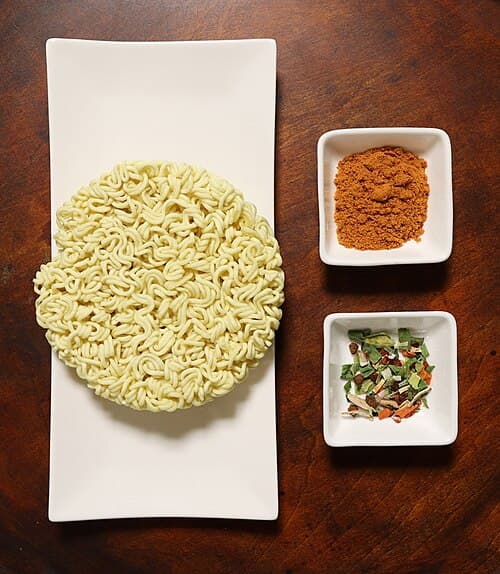
Nongshim
Shin Ramyun
The red-packet classic that set the bar for spicy Korean ramyeon.
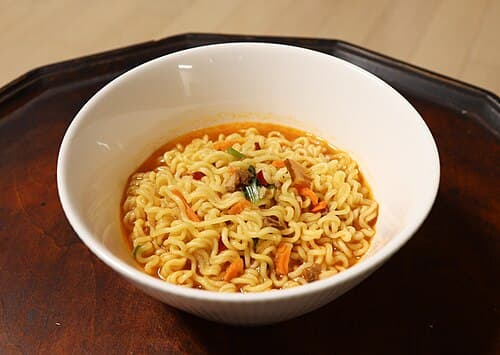
Ottogi
Jin Ramen Spicy
The red Jin Ramen: a punchy, savory rival to Shin Ramyun.
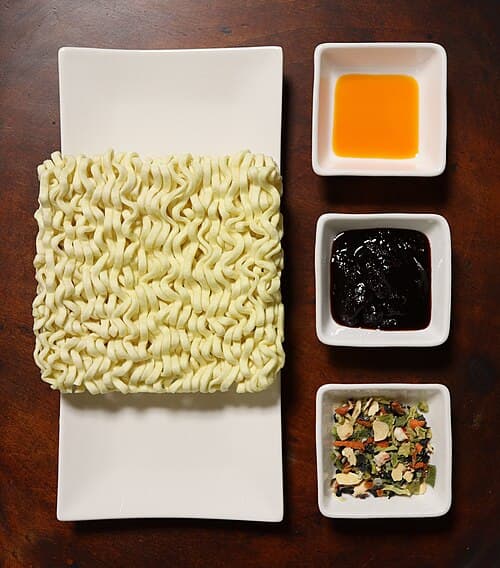
Ottogi
Ottogi Jin Jjambbong
Korean-Chinese spicy seafood soup with a smoky, wok-fired edge.
Nongshim
Nongshim Kimchi Ramyun
Tangy, garlicky kimchi broth for when you want sour and spicy in one bowl.
More in Technique
How to Cook Korean Instant Ramyeon the Right Way
Water amounts, pot choice, when to add the powder and flakes, exact timing and the noodle-lifting trick Korean home cooks use for chewy, well-seasoned ramyeon.
7 min read
6 Ways to Add Egg to Ramyeon (and When to Use Each)
Whole poached, swirled, half-broken, jammy, fried or a raw yolk: six ways Koreans add egg to ramyeon, with timings and which noodle style suits each method.
7 min read
Korean Ramyeon Spice Levels Explained (and How to Tame the Heat)
How our 0 to 5 spice scale works, where popular Korean ramyeon land on it, and simple kitchen tricks to make hot noodles milder without losing flavor.
7 min read